Choose timezone
Your profile timezone:
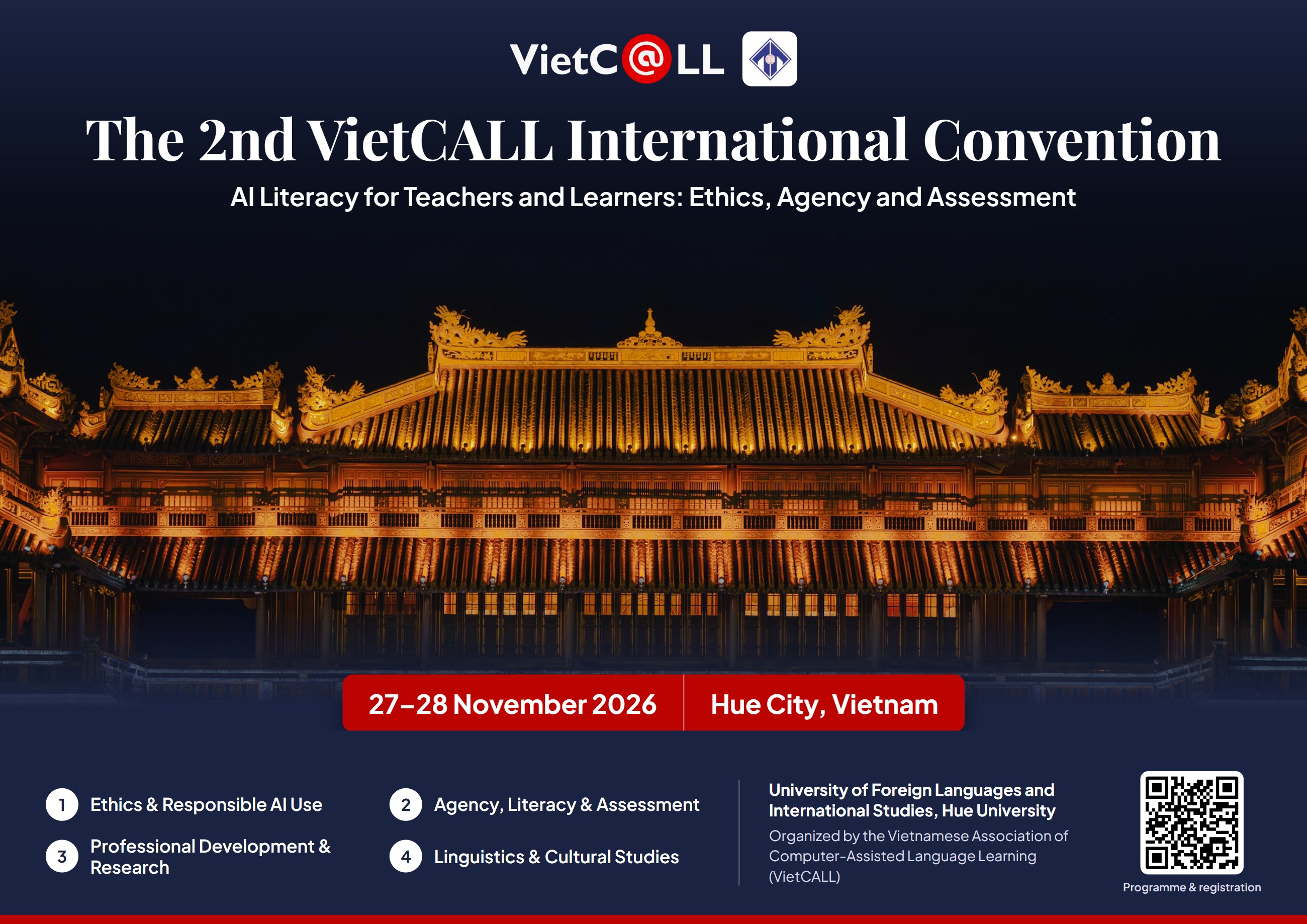
📍 Venue: University of Foreign Languages and International Studies, Hue University, Hue City, Vietnam
📅 Conference Dates: 27-28 November 2026
🏛 Organized by: Vietnamese Association of Computer-Assisted Language Learning (VietCALL)
🕒 Timezone: Asia/Ho_Chi_Minh
Generative AI and automated language technologies are rapidly reshaping how languages are taught, learned, and assessed. Teachers and learners face a dual challenge: to use AI effectively while also understanding limitations, risks, and ethical implications.
In language education, AI can support feedback, translation, writing assistance, speaking practice, and assessment—but it can also amplify inequities, blur authorship boundaries, and introduce threats to validity in testing and evaluation.
VietCALL 2026 responds to these realities by centering the conference on ethics, agency, and assessment—three pillars that shape whether AI becomes an empowering learning partner or a source of confusion, unfairness, and mistrust. AI Literacy is more than tool operation. It is the capacity to critically evaluate AI outputs, interpret system constraints, make responsible decisions, and align AI use with pedagogical goals and professional standards.
AI Literacy for Teachers and Learners:
Ethics, Agency and Assessment
VietCALL 2026 welcomes a range of scholarly and practice-oriented formats:
Note: Publication fees are separate from conference fees.
Join us to explore responsible, evidence-based AI integration in language education.
This hands-on workshop explores how teachers can use AI tools to design and refine assessment materials aligned with their teaching contexts. Participants will learn to develop test matrices based on existing syllabi, textbooks, and examination formats; generate and differentiate test items according to targeted skills, cognitive demands, and CEFR proficiency levels; and critically evaluate AI-generated items for alignment, clarity, difficulty, distractor quality, and scoring accuracy. The workshop emphasises practical workflows that combine AI assistance with teachers’ professional judgement to support effective assessment design.
This workshop is a knowledge transfer product of the N.24.18 Scientific Project sponsored by VNU University of Languages and International Studies, which explores EFL teachers' AI pedagogy competence in Vietnam. The project has developed and validated a Self-Assessment Scale grounded in two established frameworks, namely Domain 4 (AI Pedagogy) of UNESCO's AI Competency Framework for Teachers and Domain 2 (Teaching) of Vietnam's Foreign Language Teacher Competency Framework. The Scale measures teachers' ability to integrate AI in lesson planning, material development, instruction, and assessment across three proficiency levels: Acquire, Deepen, and Create. Validation with over 200 teachers confirmed strong internal consistency, with Cronbach's alpha coefficients ranging from .867 to .92.
The workshop targets secondary and upper secondary school English teachers in Vietnam and aims to help them locate their current level of AI pedagogy competence, identify concrete next steps for professional growth, and apply AI in ethically sound ways. During the two-hour session, participants first complete the validated Scale and receive personalized feedback on their proficiency level together with recommended development pathways. They then join level-based discussion groups facilitated by members of the research team who constructed the Scale. In these guided discussions, participants exchange classroom experiences, address common challenges in ethical AI use, and formulate practical action plans suited to their level. By the end of the workshop, participants will leave with an evidence-based understanding of their AI pedagogy competence and a personalized, actionable roadmap for advancing it responsibly in their teaching contexts.
Keywords: AI pedagogy competence, self-assessment scale, teacher professional development
The rapid growth of generative artificial intelligence (GenAI) has transformed English language learning, offering new opportunities while raising ethical concerns related to academic integrity, critical thinking, and responsible AI use. Although AI literacy has attracted increasing attention, little is known about how Vietnamese EFL students develop the knowledge, skills, and ethical awareness needed to use GenAI responsibly.
This study aims to explore the level of Responsible AI Literacy among Vietnamese EFL students at Hung Yen University of Technology and Education and identify factors influencing their responsible use of generative AI in English learning. A mixed-methods design will be employed. Quantitative data will be collected through a questionnaire measuring six dimensions of Responsible AI Literacy: AI knowledge, ethical awareness, critical evaluation, transparency, academic integrity, and human agency. Semi-structured interviews will then be conducted with selected participants to provide deeper insights into students' experiences and challenges.
The study is expected to reveal students' strengths and weaknesses in responsible AI use and generate practical recommendations for integrating Responsible AI Literacy into EFL teaching and learning. The findings will contribute to ongoing discussions on AI literacy, ethics, and learner agency, supporting the responsible integration of generative AI in Vietnamese higher education.
Keywords: Responsible AI Literacy; Generative AI; EFL students; Ethics; Higher education.
Generative AI technology is increasingly becoming an indispensable part of the writing process for EFL students. However, what poses a much more severe threat than plagiarism is when AI-generated text sounds accurate, fluent, and even scholarly; the concept, evidence, or reasoning behind the generated text lacks substance. The current study explores the impact of perceived AI accuracy, cognitive offloading, AI trust, and feedback dependence on the EFL academic writers’ ability to critically evaluate their work. Consistent with the VietCALL 2026 strategy, which highlights the importance of AI literacy, AI ethics, agency, and assessment; this paper suggests that the role of Generative AI in writing should go beyond efficiency gains and linguistic improvement. The study will consider real-world cases where students accept thesis statements suggested by AI as more sophisticated, take advice from AI feedback without verifying its logic, or allow AI to determine if the argument is persuasive enough. Though such behavior might seem quite productive; it could potentially lead to diminishing the autonomy of learners and their academic critical thinking. This research should bring a more detailed perspective about the need for a broader interpretation of AI literacy in EFL writing, since responsible AI usage implies not just competence in using it. Students need to be able to critically resist its conclusions, verify information, and be ready to contradict it.
Keywords: AI literacy; Cognitive offloading; Critical writing judgment; EFL writing; Feedback dependency.
English Language Teaching and Learning
This study investigates the use of AI to support English writing among English-major students at UFLS, UDN, focusing on usage practices, perceived impacts, challenges, and students’ attitudes toward AI. A quantitative survey method using a structured questionnaire was employed to collect data from 200 English-majors students currently studying at universities at UFLS, UDN. The survey covered the extent and methods of AI tool usage in English writing, AI-assisted writing activities, the impact of AI on writing proficiency, as well as the benefits, difficulties, and students’ perspectives regarding AI application in their studies. In addition, the research team also examined issues related to AI reliability, academic ethics, and data security during use. At the same time, the study analyzes students' needs and expectations regarding AI tools to more effectively support the English writing process within the higher education context. The study aims to provide an empirical basis for integrating AI into English writing instruction and to propose directions for using AI effectively, responsibly, and in alignment with academic integrity principles in higher education.
The emergence of ChatGPT is reshaping pedagogical practices and learning approaches in language education. While previous studies have explored its use in English learning, limited research has examined how students’ academic writing develops before and after using ChatGPT, particularly among English majors in Vietnam. This study aims to investigate the impact of ChatGPT on students’ academic essay writing, and their perceptions of its use in academic contexts. An explanatory sequential mixed-methods design was employed. Quantitative data were collected from 49 English-major students at a university through pre- and post-writing tasks and questionnaires. Students’ writing performance was assessed using IELTS Writing Task 2 Band Descriptors and analyzed using SPSS. Qualitative data from open-ended survey responses and semi-structured interviews were then used to further explain the quantitative findings. The results indicate that students’ writing performance improved after using ChatGPT, particularly in idea development, grammatical accuracy, and lexical use. ChatGPT was found to support students in generating ideas and refining language during the revision process. However, students also expressed concerns about overreliance, reduced creativity, and limitations in contextual understanding. These findings highlights the importance of integrating digital literacy training into writing instruction to ensure responsible use of AI tools.
The increasing use of Generative AI (GenAI) has created new opportunities for supporting qualitative research in applied linguistics, yet its reliability in analytical tasks requiring contextual interpretation remains underexplored. Drawing on the genre frameworks of Swales (1990) and Bhatia (1993), this study evaluates an AI-assisted workflow for identifying and coding rhetorical moves in corporate press releases. The dataset comprises 40 press releases, including 20 English texts from multinational corporations and 20 Vietnamese texts from major domestic companies. The researchers first used NotebookLM to generate preliminary move identification and text segmentation through zero-shot prompting. They then independently reviewed the AI-generated output, resolved coding disagreements through discussion, and established a validated coding scheme. The validated corpus was subsequently analyzed using AntConc to examine lexico-grammatical patterns associated with individual rhetorical moves.
The findings indicate that GenAI performs reliably when rhetorical boundaries are explicitly signaled but becomes less consistent when rhetorical functions are implicit or highly context-dependent, particularly in moves related to establishing corporate credibility in the Vietnamese corpus. These results suggest that GenAI can effectively support the initial stages of genre analysis but cannot replace researcher judgment in move identification and interpretation. The study therefore advocates a human-in-the-loop approach that combines AI-assisted annotation with systematic manual validation. The proposed workflow provides practical guidance for integrating GenAI into corpus-based genre analysis while promoting AI literacy, methodological transparency, and responsible AI use in linguistic research and TESOL.
Abstract:
In many Vietnamese EFL contexts, non-English-major learners are required to achieve a certain level of English proficiency through standardized tests such as VSTEP. At FND Education Company, a number of English learners are non-English-major students or adult learners who study English for academic requirements, graduation standards, career development, or workplace communication. Although these learners often have clear learning goals, they may face challenges in VSTEP Speaking preparation, including limited speaking practice opportunities, low confidence, uneven proficiency levels, limited vocabulary, weak idea organization, and a lack of individualized learning pathways.
This presentation explores how artificial intelligence can be used to support teachers in designing personalized VSTEP Speaking preparation pathways for non-English-major EFL learners at FND Education Company. The presentation focuses on the process of moving from learner diagnosis to targeted speaking practice. AI tools can assist teachers in identifying learners’ strengths and weaknesses based on speaking samples, self-assessment responses, mock test performance, or classroom observation notes. Based on this diagnostic information, teachers can use AI to generate level-appropriate speaking tasks, topic-based practice plans, vocabulary support, sample responses, feedback prompts, and self-study activities aligned with the structure and requirements of VSTEP Speaking.
The presentation also emphasizes the role of teacher agency in AI-supported test preparation. While AI can generate useful materials and learning suggestions, teachers remain responsible for evaluating accuracy, adapting content to learners’ needs, ensuring alignment with VSTEP Speaking assessment criteria, and maintaining meaningful communicative practice. Ethical and pedagogical considerations, including responsible AI use, learner autonomy, and the risk of over-reliance on AI-generated answers, will also be discussed.
By presenting a practical AI-supported framework based on the teaching context at FND Education Company, this session aims to provide EFL teachers with useful insights into how AI can enhance diagnostic teaching, personalized learning, and speaking readiness for non-English-major learners preparing for VSTEP Speaking.
Keywords:
AI-assisted language teaching; VSTEP Speaking; personalized learning pathways; non-English-major EFL learners; FND Education Company; speaking preparation; diagnostic teaching; learner autonomy.
Artificial intelligence (AI) is rapidly transforming language education, making AI literacy an essential competency for future English language teachers. However, evidence regarding the AI literacy of Vietnamese pre-service EFL teachers remains limited. This study investigated the AI literacy profiles and development challenges of pre-service EFL teachers at a university to identify implications for teacher education. A sequential explanatory mixed-methods design was employed. Quantitative data were collected from 42 questionnaire responses using an adapted Artificial Intelligence Literacy Scale for Teachers (AILST), followed by semi-structured interviews with five participants to explain the quantitative findings. Results revealed that participants demonstrated a moderately high overall level of AI literacy, with the strongest performance in AI perception and AI ethics. In contrast, AI knowledge & skills and AI applications & innovation were noticeably weaker. Interview findings further indicated that limited technical competence, insufficient foundational AI knowledge, inadequate access to quality learning resources, financial constraints, and limited formal AI training restricted participants' ability to integrate AI confidently into language teaching. These findings suggest a gap between positive attitudes toward AI and practical classroom competence. The study argues that teacher education programs should move beyond raising awareness by embedding structured, practice-oriented AI literacy training that integrates technical, pedagogical, and ethical dimensions. Such initiatives can better prepare future EFL teachers for responsible and effective AI integration in language education.
Keywords: artificial intelligence, AI literacy, pre-service EFL teachers, teacher education, TESOL
This paper aims to investigate differences in syntactic complexity in the essays produced by ChatGPT and students in the Vietnamese EFL context. A quantitative corpus-based comparative design was adopted to address this aim. The data consist of 60 process essays, including 30 essays written by Vietnamese undergraduates and 30 essays produced by ChatGPT. Syntactic complexity was measured using the L2 Syntactic Complexity Analyzer (L2SCA). The study targets examining four indices, namely mean length of sentence (MLS), mean length of T-unit (MLT), mean length of clause (MLC), and clauses per sentence (C/S). The findings revealed significant differences in MLC and C/S. In contrast, there are no significant differences found in MLS and MLT. Specifically, ChatGPT-generated essays demonstrate a higher mean length of clause, which shows a greater amount of information within individual clauses. However, Vietnamese EFL students' essays exhibit higher clauses per sentence, which indicates that Vietnamese EFL students have a tendency to embed more clauses within sentences. The present study contributes to the growing body of research on the differences in syntactic complexity between ChatGPT and students’ writing in Vietnamese EFL context. In addition, the findings also provide linguistic insights that may help teachers and learners develop a more informed understanding of the linguistic characteristics of ChatGPT-generated writing and how it differs from authentic student writing, thereby supporting AI literacy in EFL education.
KEYWORDS: Syntactic complexity; L2 Syntactic Complexity Analyzer (L2SCA); Vietnamese EFL learners; ChatGPT-generated writing; corpus-based analysis
Abstract
Generative AI is increasingly embedded in academic writing, yet existing research has focused more on writing outcomes and learner perceptions than on how learners negotiate control during AI-mediated revision. Grounded in a sociocultural understanding of agency as mediated, relational, and context-dependent, this qualitative multiple-case study explored how eight Vietnamese university EFL students revised two academic essays through two AI-assisted revision cycles over six weeks. Data comprised successive drafts, AI interaction logs, reflective notes, and stimulated-recall interviews. Thematic analysis of interactional and reflective data was integrated with revision analysis across drafts. Findings indicated that agency was task-contingent and shifted within and across cases. At some points, students went beyond simply copying AI-generated text, iteratively prompting AI, comparing alternatives, challenging inaccurate suggestions, and selectively adapting output to preserve intended meanings and rhetorical purposes. At other points, they accepted polished reformulations with limited evaluation or focused primarily on surface-level correction. These shifts were associated with linguistic confidence, perceived task difficulty, and calibrated trust in AI. The study conceptualises AI-assisted revision as a process in which decision-making control is repeatedly enacted and redistributed. For TESOL pedagogy, the findings highlight the need to develop learners’ evaluative judgement, purposeful prompting, and accountable revision practices rather than treating AI literacy as tool use alone.
Keywords: generative artificial intelligence, learner agency, academic writing revision, AI-mediated feedback, Vietnamese higher education
The rapid uptake of generative AI is transforming how engineering students produce multimodal texts - slides, diagrams, and AI-generated images for technical presentations, yet existing assessment rubrics rarely account for work that is partly machine-created. This raises pressing questions of fairness, validity, and academic integrity: how can teachers assess multimodal communicative competence when authorship is shared between student and AI? This study designs and pilot-tests a multimodal assessment rubric for AI-assisted technical presentations in an English for Specific Purposes (ESP) course for engineering students. Drawing on multiliteracies pedagogy and validity theory, the rubric distinguishes students' communicative and design decisions from AI-generated content. It was developed and trialled with a cohort of undergraduate presentations and refined through teacher–student feedback. The study is expected to yield practical, transparent criteria for evaluating AI-mediated multimodal work while safeguarding academic integrity. For TESOL and ESP practitioners, it offers a classroom-ready instrument and design principles for AI-aware assessment, supporting fairer evaluation and stronger learner agency in technical English contexts.
Keywords: multimodal assessment, rubric design, AI-assisted learning, English for Specific Purposes, academic integrity
Collegial support can play an important role in teachers’ professional development by providing opportunities for sharing knowledge, exchanging teaching experiences, solving classroom-related problems, and learning collaboratively. However, the ways in which university English lecturers perceive and experience such support may vary according to their professional needs and career stages. This study aims to explore EFL university lecturers’ perceptions of collegial support for their professional development, with particular attention to the forms of support they experience, how they perceive such support, and how it may contribute to their professional learning and teaching practices. Adopting a qualitative approach, the study will involve six EFL lecturers from one university, purposively selected to represent varied levels of teaching experience and participating voluntarily. Data will be collected through an open-ended questionnaire followed by individual semi-structured interviews lasting approximately 30–45 minutes. The questionnaire will provide an initial overview of participants’ professional backgrounds and experiences of collegial support, while the interviews will enable more in-depth exploration of their perceptions and experiences. The data will be analysed using thematic analysis to identify recurring patterns and themes across participants’ accounts. The study is expected to provide a contextualised understanding of how collegial relationships may facilitate or constrain lecturers’ professional development and to offer implications for fostering more supportive and collaborative professional learning environments in higher education.
This study investigates the application of multimodal discourse analysis (MDA) based on artificial intelligence (AI) to enhance university English teaching, particularly in Academic English writing and digital multimodal composing courses. The purpose is to examine how AI-powered tools—such as text-to-video generators, voice-based chatbots, and AI feedback systems—reshape semiotic decision-making, meaning-making processes, and student engagement in higher education English contexts. Employing a mixed-methods design, the research involves 200 EFL university students enrolled in an Academic English course integrating AI-enhanced multimodal activities. Data collection includes AI-generated video compositions, student written reflections, classroom interaction recordings (voice, text, facial expressions, body movements), and post-task questionnaires measuring self-efficacy, enjoyment, and continuance intention. The methodology combines multimodal critical discourse analysis with cross-modal feature dynamic fusion modeling to analyze semantic associations and emotional states in teacher-student-AI interactions. Findings reveal that AI significantly enhances students' technical fluency, design experimentation, and efficiency in mode-switching. Students demonstrate high self-efficacy and enjoyment when using AI text-to-video tools, with strong continuance intention. Quantitative results indicate improved teacher response delay (2.19 seconds), increased student interaction density (14 times per minute), and stable high emotion scores (3.4–4.3). However, challenges persist in critical AI evaluation, ethical attribution, and preservation of authorial voice. The implications underscore the necessity of integrating AI literacy into university English curricula, emphasizing AI as a collaborative scaffold rather than a substitute for human creativity. This research contributes theoretical insights into AI as semiotic agents in multimodal meaning-making and offers practical strategies for pedagogical reform in the age of AI, supporting the transition from single-modality to multimodal teaching paradigms in English education.
This study investigates the pedagogical strategies adopted by IELTS writing teachers at a private language centre in Hanoi, Vietnam, regarding students' use of generative AI. It addresses two research questions: (1) What pedagogical strategies do IELTS writing teachers employ regarding students' use of generative AI in IELTS writing classrooms? (2) How do teachers explain and justify these strategies in their classroom practice? Adopting an interpretivist qualitative design, the study collects data through a two-round email interview with eight IELTS writing teachers. The first round invites reflective responses to open-ended questions about teaching IELTS writing in the age of GenAI; the second round uses individualized follow-up questions to clarify and deepen emerging interpretations. Data are analysed using reflexive thematic analysis (Braun & Clarke, 2006). Rather than evaluating GenAI tools themselves, the study focuses on how teachers adapt their pedagogy to AI-supported writing. Findings are expected to show how teachers balance responsible AI use with students' writing development, and the reasoning behind these choices, with implications for teacher professional development, AI literacy, and responsible AI integration in IELTS writing and similar high-stakes language learning contexts
The rapid adoption of generative artificial intelligence (GenAI) is reshaping academic writing practices in higher education and creating new opportunities as well as challenges for English as a Foreign Language (EFL) education. While AI-powered tools such as ChatGPT, Gemini, and Grammarly can support idea generation, language development, and writing revision, they also raise important concerns regarding academic integrity, learner agency, critical thinking, and responsible AI use. As a result, AI literacy has become an essential educational competency that extends beyond technological skills to include critical evaluation, ethical awareness, and informed decision-making. Despite growing research on AI-assisted language learning, most studies have focused on students' perceptions and patterns of AI use rather than on pedagogical approaches that explicitly integrate AI literacy into academic writing instruction. Addressing this gap, this work-in-progress paper presents the conceptual rationale and proposed research design of an ongoing doctoral study that explores how AI literacy can be meaningfully embedded into undergraduate EFL academic writing courses in Vietnam. The proposed study adopts a multi-phase mixed-methods design. The initial phase will investigate students' current AI literacy and AI-assisted writing practices through surveys and semi-structured interviews. Findings from this phase will be used to identify pedagogical directions for integrating AI literacy into academic writing instruction. Subsequent phases of the research will examine how these pedagogical directions may support responsible AI use in classroom practice. The study is expected to contribute to current discussions on AI literacy in language education by offering pedagogically grounded insights into curriculum development and classroom implementation. It also seeks to provide practical guidance for educators who aim to integrate AI literacy into academic writing while promoting responsible AI use in Vietnamese higher education.
Keywords: AI literacy; generative artificial intelligence; academic writing; responsible AI use; EFL; higher education.
Argumentative writing is a cornerstone of academic literacy, yet remains challenging for EFL learners. Although ChatGPT shows promise for supporting it, research has focused on error-oriented feedback, leaving comparative configurations underexplored. This mixed-methods quasi-experimental study compared Socratic scaffolded and directive ChatGPT feedback on Vietnamese EFL university students' argumentative writing. Twenty-eight students in two proficiency-matched groups completed a four-week intervention of weekly writing tasks. Both conditions used the same model, differing only in feedback: scaffolding withheld correction, prompting learners to justify claims, supply warrants and address counter-arguments, whereas directive feedback supplied explicit corrections. Performance was assessed via pre/post-tests scored on Alnemrat et al.'s (2025) rubric, analysed through ANCOVA with pre-test scores as covariate, and inter-rater agreement was reported. Findings indicated that both models enhanced writing, but scaffolding better supported argument development, critical reasoning and independent revision, whereas directive feedback yielded greater accuracy gains. Interviews revealed that scaffolding fostered ownership of reasoning, while directive feedback was valued for immediacy. Conducted with institutional approval and informed consent, the study offers a principled basis for selecting AI feedback strategies.
Keywords: ChatGPT feedback, argumentative writing, Socratic scaffolding, EFL writing instruction, AI-assisted language learning
Generative artificial intelligence is increasingly shaping communication across languages and cultures, yet many classroom applications continue to treat AI as a neutral assistant rather than an active participant in meaning making. This interactive workshop explores how AI can both support and complicate intercultural communication in education. Drawing on principles from virtual exchange and intercultural pedagogy, participants will engage in collaborative activities that examine how AI generated responses vary across languages, prompts, and cultural contexts. Working in small groups, they will compare multilingual outputs, identify cultural assumptions and potential biases, evaluate the appropriateness of AI-generated responses for different audiences, and discuss strategies for helping learners critically engage with AI rather than simply accept its recommendations. Participants will then design an AI mediated intercultural learning activity for their own teaching contexts that integrates language learning, cultural reflection, and ethical AI use. The workshop emphasizes learner agency by positioning students as critical interpreters of AI generated content rather than passive users of AI tools. Participants will leave with adaptable classroom activities, discussion prompts, and design principles that promote AI literacy alongside intercultural communicative competence, offering practical approaches for preparing language learners to communicate responsibly in increasingly AI environments.
Keywords: AI literacy, intercultural communication, virtual exchange, multilingualism, TESOL
Workshop Activities
The workshop itself could be highly interactive:
Abstract
Generative artificial intelligence (AI) tools are rapidly reshaping language education, requiring educators to balance technological integration with pedagogical responsibility. Grounded in Priestley et al.’s (2015) ecological perspective of teacher agency, this study aims to examine how participation in AI-empowered corpus-based language pedagogy (CBLP) competitions shapes the agency of English language teachers.
This mixed-methods case study tracked five Vietnamese teachers and student teachers in CBLP lesson design and teaching competitions organised by The Education University of Hong Kong. Data were collected through pre- and post-competition questionnaires and semi-structured interviews.
Quantitative findings reveal positive shifts in participants’ readiness and confidence to implement AI-empowered CBLP integration. Rather than acting as passive consumers of technology, participants actively exercised teacher agency by critically evaluating and adapting AI-generated materials to ensure pedagogical alignment with specific learner needs and local contexts. Qualitative data highlight a distinct transition from intuition-based teaching to a more systematic and data-driven approach, where corpus evidence served as an empirical baseline to verify AI suggestions. Teacher agency was significantly fostered through collaborative reflection, empowering participants to navigate technical challenges and refine instructional strategies based on expert and peer feedback.
These results position AI and corpus tools as supports, not substitutes, for educator expertise and judgement, thereby deepening the theoretical understanding of teacher agency during the current AI evolution in language education and offering practical insights for designing evidence-based TESOL professional development initiatives.
Keywords: generative artificial intelligence, corpus-based language pedagogy, tesol, teacher agency, professional development
References
Priestley, M., Biesta, G., & Robinson, S. (2015). Teacher agency: An ecological approach. Bloomsbury Academic. https://doi.org/10.5040/9781474219426
As generative AI becomes increasingly integrated into language education, educators face new opportunities to support intercultural communication without diminishing authentic human interaction. This workshop draws on principles developed through international virtual exchanges to explore how AI can enhance rather than replace collaborative language learning. Participants will analyze examples of AI-supported intercultural activities and work in small groups to design learning tasks that integrate multilingual communication, collaborative inquiry, cultural reflection, and ethical AI use. Workshop activities emphasize learner agency by encouraging participants to evaluate AI-generated translations, identify cultural assumptions, and develop prompts that foster meaningful dialogue among learners from different linguistic and cultural backgrounds. Participants will create an AI-enhanced virtual exchange activity adaptable to their own educational contexts and discuss strategies for promoting critical AI literacy alongside intercultural competence. The workshop demonstrates that established practices in virtual exchange—including trust building, reflection, negotiation of meaning, and collaborative problem solving—offer valuable pedagogical foundations for human–AI collaboration in language education. The session provides TESOL practitioners with practical models for designing AI-supported learning experiences that strengthen communication, cultural awareness, and responsible technology use.
Keywords: virtual exchange, artificial intelligence, intercultural communication, collaboration, TESOL
翻转课堂教学模式在越南河内汉语初级综合课教学中的应用研究
摘要:本文以《汉语教程·第一册》第十课《他住哪儿》为例,运用文献研究法、课堂观察法和实践法,探讨人工智能辅助翻转课堂在越南初级汉语综合课中的应用。教学过程分为课前自主学习、课中知识内化和课后知识运用三个阶段,重点分析人工智能在教学资源设计、课前学习支持、课堂练习设计和学习反馈中的辅助作用。同时,本文从教师责任、学生主体性、人工智能伦理和学习评价等方面进行反思,强调教师应审核人工智能生成的内容,引导学生合理使用人工智能,并重视信息准确性、隐私保护和独立语言表达。本文旨在为人工智能辅助越南初级汉语翻转课堂的教学设计与实践提供参考。
关键词:人工智能;翻转课堂;越南初级汉语教学;教学设计;教学实践
Tóm tắt: Bài viết lấy bài 10 《他住哪儿》 trong giáo trình 《汉语教程·第一册》 làm ví dụ, vận dụng phương pháp nghiên cứu tài liệu, quan sát lớp học và phương pháp thực tiễn để tìm hiểu việc ứng dụng trí tuệ nhân tạo (AI) hỗ trợ lớp học đảo ngược trong môn Hán ngữ tổng hợp sơ cấp tại Việt Nam. Quá trình giảng dạy gồm ba giai đoạn: tự học trước giờ học, kiến thức trên lớp và vận dụng kiến thức sau giờ học. Bài viết phân tích vai trò hỗ trợ của AI trong thiết kế tài nguyên giảng dạy, chuẩn bị bài tập, hỗ trợ tự học và phản hồi học tập. Đồng thời, nghiên cứu nhấn mạnh trách nhiệm kiểm duyệt của giáo viên, tính chủ động của người học, đạo đức AI, bảo vệ quyền riêng tư và đánh giá năng lực sử dụng ngôn ngữ độc lập. Bài viết nhằm cung cấp tài liệu tham khảo cho việc thiết kế và triển khai lớp học đảo ngược có AI hỗ trợ trong giảng dạy tiếng Trung sơ cấp tại Việt Nam.
Từ khóa: Trí tuệ nhân tạo (AI); lớp học đảo ngược; giảng dạy tiếng Trung sơ cấp tại Việt Nam; thiết kế giảng dạy; thực tiễn giảng dạy.
Kính gửi Ban Tổ chức Hội thảo,
Tôi xin gửi tới Ban Tổ chức bài toàn văn tham dự hội thảo với thông tin như sau:
Tên bài viết: Ứng dụng trí tuệ nhân tạo tạo sinh trong xây dựng bản đồ số tương tác văn hóa - văn học dân tộc thiểu số: Một tiếp cận từ giáo dục dựa vào địa điểm số
Bài viết tập trung trình bày khả năng ứng dụng trí tuệ nhân tạo tạo sinh trong việc xây dựng bản đồ số tương tác nhằm hỗ trợ dạy học, khám phá và bảo tồn các giá trị văn hóa - văn học dân tộc thiểu số. Từ tiếp cận giáo dục dựa vào địa điểm số, bài viết đề xuất hướng kết nối giữa tư liệu văn hóa, không gian địa lí, trải nghiệm học tập và công nghệ số, qua đó góp phần đổi mới phương pháp giáo dục, tăng cường tính tương tác và khơi gợi sự tham gia chủ động của người học.
Kính mong Ban Tổ chức xác nhận đã nhận được bài toàn văn và phản hồi nếu cần bổ sung, chỉnh sửa thông tin theo quy định của hội thảo.
Xin trân trọng cảm ơn Ban Tổ chức.
This study examines how human-centred education is discursively constructed in the English-language representation of the WISE 2025 Opening Ceremony. Drawing on Norman Fairclough’s three-dimensional framework of Critical Discourse Analysis, it adopts a qualitative case-study approach to examine selected speeches and an on-stage interview, including contributions delivered through English interpretation. The analysis focuses on metaphor, modality, evaluative language, and the allocation of agency, relating these textual features to the ceremony’s institutional context and its framing of educational futures.
A preliminary reading identifies a shared commitment to human values alongside divergent representations of AI. AI is framed as a potential source of dependency and lost freedom, an extension of human intelligence, and a creative resource requiring ethical direction. Metaphors of servitude, reflection, and parental responsibility position humans differently as subjects at risk, decision-makers, and moral educators of intelligent systems. These representations reveal tensions between technological optimism and concerns about intellectual ownership, educational responsibility, and the value of learning through uncertainty and error. Human-centred education consequently emerges as a contested orientation through which speakers articulate different expectations of technological progress. The study contributes to understanding how educational summit discourse constructs legitimate roles for AI while defining the human capacities and values that education should preserve. Its conclusions remain specific to the selected event and acknowledge the interpretive mediation of translated contributions.
Keywords: Critical Discourse Analysis; Artificial Intelligence in Education; WISE 2025; Human-Centred Education; Human Agency; Educational Discourse.
This study investigated the phenomenon of lexical gaps between English and Vietnamese through the lens of Contrastive Analysis, Document Analysis, and Artificial Intelligence (AI)-assisted translation studies. It aimed to explore the similarities and differences in how these two languages handle untranslatable concepts, evaluate the role of AI-powered translation tools in addressing lexical gaps, and identify effective translation methods for bridging these gaps in cultural texts. A qualitative research design was adopted, involving a systematic examination of cultural samples selected from the Nhan Dan Newspaper and National Geographic. The data were analyzed using thematic analysis and a four-step contrastive procedure including description, selection, contrast, and prediction, alongside comparative observations of AI-generated translations. The findings indicated that while both languages share similarities in semantic, taxonomic, and translational gaps, significant differences emerge in morpheme, morphological, and paradigm structures. Specifically, lexical gaps were found to be largely shaped by environmental covariates, social constructs, and historical influences. The study further revealed that although AI-based translation systems can enhance translation speed and lexical accessibility, they frequently struggle to preserve culturally embedded meanings and nuanced contextual expressions. Results suggested that Adaptation and Transposition are the most suitable methods for addressing morpheme gaps, whereas Adaptation emerged as the dominant strategy for fulfilling semantic and taxonomic gaps to preserve cultural nuances. However, the study also demonstrated that literal translation and AI-generated direct equivalence often fail to capture the cultural essence of either language due to deep structural disparities. Results were discussed, and implications for improving AI-assisted translation practices, enhancing translation quality for students and teachers, and recommendations for future research in broader cultural and technological domains were presented.
The rapid emergence of generative artificial intelligence (AI) has transformed the way graduate students engage in academic research and thesis writing. Despite growing interest in AI-assisted learning, limited research has examined how Master’s students actually use AI throughout the thesis process and how they understand the ethical boundaries of such use. This qualitative descriptive study investigates the experiences of TESOL/English Studies Master’s students who employ AI tools to support the development of their theses. Drawing on Activity Theory as a theoretical lens, the study conceptualizes AI as a mediating artifact that shapes interactions between students, research tasks, institutional rules, and academic communities. Data were collected through semi-structured interviews with eight Master’s students and analyzed using thematic analysis. The findings indicate that students use AI in multiple stages of thesis development, dominantly in generating research ideas, identifying and synthesizing relevant literature, less in suggesting research methodologies, and assisting with the interpretation and explanation of research findings. Participants generally perceived AI as a convenient and efficient research companion that helped reduce cognitive load and improve productivity, especially in time constraints. However, the findings also revealed significant uncertainty regarding appropriate and inappropriate uses of AI in academic research. Many students report limited awareness of institutional regulations, ethical principles, and potential risks related to over-reliance on AI, plagiarism, authorship, and academic integrity. The study contributes to the emerging literature on AI-assisted academic research by providing insights into students’ actual practices and challenges. It also highlights the need for universities to develop clear policies, ethical guidelines, and training programs that promote responsible, transparent, and academically sound uses of AI in thesis writing and graduate education.
Keywords: artificial intelligence, thesis writing, master’s students, Activity Theory, academic integrity, AI policy
The growing adoption of generative artificial intelligence (AI) has transformed academic reading in English medium of instruction (EMI) contexts. However, as students increasingly rely on AI, questions arise about their capacity to maintain learner agency. However, while previous studies have mostly focused on the effectiveness and acceptability of AI applications, little attention has been paid to students’ responsible use of AI while maintaining learner agency. This study investigated learner agency in responsible use of AI in academic reading of EMI students in Vietnam. Explanatory sequential design of mixed methods research was applied. In the quantitative phase of the research, questionnaires were completed by 100 EMI students, and the data were statistically analyzed in order to investigate learner agency and responsible AI-assisted academic reading of the participants. The outcomes of the quantitative phase were then used in the qualitative phase of the study where ten purposively sampled participants underwent semi-structured interviews, and thematic analysis of interview data was performed in order to better understand participant experiences and decisions regarding AI use in academic reading. The findings revealed that regular use of AI does not mean learner agency. Instead, students with high level of metacognition were better able to to craft appropriate prompts, critically evaluate AI-generated output, and decide when to read independently rather than rely on AI assistance. These findings suggest that fostering metacognitive skills should be prioritized in EMI curricula to help students use AI responsibly without compromising their learner agency.
Keywords: Learner agency, responsible AI use, self-regulated learning, English-medium instruction, Generative AI
This qualitative study explores how Vietnamese upper-secondary English teachers understand and enact digital competence and how their engagement with technology and generative artificial intelligence (AI) reflects emerging dimensions of digital teacher identity. Data were generated through semi-structured interviews with nine teachers working in public high schools and language centres, with teaching experience ranging from one to 21 years, and analysed thematically. Findings show that teachers valued digital technologies for saving time, increasing learner engagement, and supporting lesson preparation, materials development, classroom presentation, practice, assessment, and task personalisation. Their accounts positioned teachers not only as technology users but also as pedagogical decision-makers responsible for selecting, verifying, and adapting AI-generated content. Nevertheless, most reported practices remained focused on content delivery, practice, and knowledge checking, while technology-supported activities promoting analysis, evaluation, creativity, and learner autonomy were less systematic. Teachers expressed uneven confidence and often developed their digital competence through self-directed learning. Limited practical training, preparation time, unequal access to devices, AI inaccuracy, student overreliance, and ethical concerns complicated their developing digital professional identities. The findings suggest that digital teacher identity is negotiated through tensions between innovation and established pedagogical values, and between technological efficiency and professional judgement. TESOL teacher education should therefore integrate hands-on digital pedagogy, critical AI literacy, and structured opportunities for teachers to reflect on their changing professional roles.
As real-time AI translation increasingly reduces the need for conventional language proficiency in some forms of cross-linguistic communication, a more fundamental question emerges for English language teachers: what is their profession for when translation itself can be technologically mediated? This study explores how novice English language teachers reimagine professional purpose and identity in response to this emerging possibility. A small-scale qualitative study was conducted with six novice teachers working in Vietnamese higher education. Data were generated through future-oriented vignette-based interviews in which participants first articulated their current professional identities, then responded to a plausible scenario of widespread real-time AI translation, and finally reflected on possible future teacher selves. Analysis combined thematic coding with an identity-positioning lens. The findings show that participants did not converge on a single AI-era teacher identity. Instead, they re-anchored professional purpose beyond basic linguistic mediation, emphasizing human connection, intercultural understanding, strategic communication, technological agency, critical voice, or, in one case, the intrinsic value of linguistic mastery. Their future identities reflected divergent trajectories of consolidation, expansion, intensification, and repositioning. Across cases, feared futures centred less on technological replacement than on deprofessionalization—the loss of expertise, judgement, agency, or meaningful human contribution. The study argues that professional purpose may mediate between present professional self-understanding and imagined future identities. It suggests that teacher education should move beyond asking how teachers can use AI to also ask what English education should be for in an increasingly AI-mediated multilingual world.
ABSTRACT
The integration of generative artificial intelligence (AI) into higher education raises questions about how tools such as Gemini affect foreign language writing and learners’ autonomy. Recent work on AI assisted writing mainly discussed learners’ perceived advantages and disadvantages; however, little attention has been paid to the aligned and diverging views of students and lecturers on the pedagogical, ethical, and assessment implications of using Gemini in an EFL writing course. This study investigates the perceptions of lecturers and second-year English majors regarding the use of Gemini in Writing 2 at Quy Nhon University. Specifically, it examines students' perceived usefulness, perceived ease of use, attitudes, and behavioral intentions, and explores lecturers' perspectives on the benefits, risks, and regulatory needs associated with Gemini supported writing. A mixed methods design was adopted, combining survey data from 200 students and 5 lecturers with semi structured interviews with 10 participants. Quantitative data were analyzed through descriptive statistics, while qualitative data were examined using thematic analysis. The findings reveal that students generally hold favorable views of Gemini in Writing 2 and express a strong intention to continue using it. Lecturers likewise acknowledge Gemini as a valuable support tool, yet they raise concerns about overreliance and diminished independent thinking. The study argues that Gemini should be used selectively as a writing aid, with explicit guidance, training, and clear course policies to ensure responsible AI use and reflective, ethically informed writing practices.
Keywords: generative artificial intelligence (AI), Gemini, EFL writing, higher education, student perceptions, lecturer perspectives.
This study investigates the prompt engineering practices and skills of English-major students of UFLS, UDN using generative AI to assist their learning. It focuses on how students construct and refine prompts, the extent to which they apply prompting techniques to achieve learning objectives, and the challenges and training needs they encounter while interacting with generative AI. A quantitative survey method using a structured questionnaire was employed to collect data from 250 English-major students of UFLS, UDN. The survey covered aspects such as experience with generative AI, prompt construction habits, prompt optimization skills, the ability to evaluate and adjust AI responses, and students' perceptions regarding the role of prompts in enhancing English learning effectiveness. The findings are expected to provide a practical basis for developing curricula on generative AI and prompt engineering, thereby contributing to the enhancement of English-major students' capacity to use AI effectively, responsibly, and appropriately in studying English at universities.
This paper aims to explore primary school teachers’ attitudes toward utilizing Wayground, an AI-based educational platform, to create assessments for their classrooms. Specifically, the research focuses on teachers’ perceptions of the platform’s usefulness, benefits, and challenges in designing classroom assessments. With Wayground, teachers can create quizzes, adjust test materials, and provide feedback on results immediately. In addition, the platform’s AI capabilities may assist teachers in creating and modifying assessment content.
To achieve the research objectives, an exploratory research design and a mixed research methodology are used in this study. The research is conducted in two phases, beginning with a quantitative phase followed by a qualitative phase. The quantitative data is a survey on the frequency of Wayground use before and after training, conducted through a questionnaire. Specifically, the survey assesses the effectiveness of assessments for their classrooms before and after integrating and applying the Wayground platform in the classroom context from the perspective of primary school teachers. In the qualitative research phase, in-depth interviews are conducted to clarify the views and attitudes of primary school teachers regarding the application of Wayground in teaching.
The findings of this study propose to contribute to both theory and practice. Theoretically, the study may enrich the existing literature on AI-assisted assessment and teachers’ adoption of educational technology by providing empirical evidence from the primary education context. Practically, the findings are expected to offer recommendations for teachers, school leaders, and policymakers on the effective integration of Wayground into assessment design. The development of teacher professional development programs and support the implementation of AI-assisted assessment practices may be informed in primary education.
Keywords: primary teacher, attitudes, AI-embedded Wayground, AI-assisted assessment design
Simple requests for help from generative AI (genAI) can lead a tool to perform work that teachers intended to be learning experiences for students. The purpose of this study is to investigate the pedagogical guardrails of commercial genAI tools by examining how they respond when a learner makes requests under different instructional boundaries. Using prompt-based discourse elicitation (PBDE) as a methodology, the study presents different genAI tools with the same writing task under contrasting conditions. First, an open-ended request for help establishes the tools’ default behavior. Other trials introduce teacher-provided instructions that restrict genAI use and test whether the tools recognize those boundaries. Finally, PBDE examines explicit learner requests for guidance that ask the tools to provide feedback and ask leading questions rather than rewrite the text. Responses are analyzed according to how far the systems intervene in the learner’s work and whether they respect the stated instructional boundary. Expected findings are that underspecified requests will encourage substantial direct intervention, while explicit constraints will produce more pedagogically supportive behavior. The study approaches these differences as questions of genAI literacy. The implications for TESOL are that responsible educational use of genAI depends not only on learners understanding instructor boundaries, but also on their ability to use prompt engineering to shape the kind of assistance they receive. The findings may inform genAI literacy and ethics by offering specific suggestions for writing pedagogy in language learning classrooms.
Keywords: generative AI; AI literacy; learner agency; writing assistance; prompt-based discourse elicitation
The emergence of generative artificial intelligence (AI) has quickly opened the door to new ways to develop teaching and learning at various stages of education. With the growing availability of AI tools, primary school teachers should also be able to foster the required knowledge and practice to know when and where to use these tools to effectively and responsibly deploy. However, little is known about teachers’ knowledge of AI literacy and readiness for adopting AI in classrooms. This study examines Vietnamese primary school teachers' AI literacy; their preparedness for AI, difficulties with digital literacy, and professional development. It adopted a mixed-methods design. Quantitative data were collected via a questionnaire given to 150 respondents, and semi-structured interviews were carried out with 10 teachers to gain additional information from their experiences and concerns. Descriptive statistics and inferential analyses were carried out to examine teachers' AI literacy levels and readiness, while thematic analysis was pursued for interview data. Findings indicate that although teachers generally have positive attitudes to AI, their AI literacy levels vary greatly. The most significant difficulties are that of insufficient opportunities for training, concerns over the ethics involved and uncertainty about pedagogic integration. The research indicates that targeted interventions in terms of professional development as well as institutional support are required to foster responsible and successful AI implementation in the initial stages in primary education.
Generative Artificial Intelligence (GenAI) has increasingly been integrated into academic writing instruction; however, empirical evidence of its effects on English-majored students’ writing performance and learner agency remains limited in the Vietnamese higher education context. This study investigates the extent to which GenAI-assisted writing instruction affects English-majored students’ academic writing performance and explores students’ perceptions of the role of GenAI in supporting their writing development and learner agency. A quasi-experimental mixed-methods design was employed at a Vietnamese public university. Students took part in a GenAI-assisted writing intervention, their academic writing performance was examined through pre-test and post-test measures. Quantitative data were analyzed to determine changes in writing performance, while qualitative data from student reflections and/or interviews were examined thematically to explore students’ experiences and perceptions. The findings are expected to provide empirical evidence of the pedagogical value of GenAI-assisted writing instruction while also highlighting the conditions under which GenAI may support students’ development as more active and self-directed writers. The study contributes to the emerging literature on GenAI in English language education by connecting writing performance with learner agency and by providing evidence from a Vietnamese public university context. The findings may inform the design of responsible and pedagogically grounded approaches to integrating GenAI into academic writing instruction in higher education.
Key words: generative artificial intelligence; GenAI-assisted writing; writing performance; English-majored students; mixed-methods research; quasi-experimental design
The rapid advancement of artificial intelligence (AI) tools like ChatGPT and Gemini is fundamentally reshaping English language teaching (ELT), yet teacher readiness to navigate this field remains uneven. This study investigates the extent to which EFL teachers perceive themselves as AI-literate and identifies specific self-perceived gaps in their beliefs and confidence. Grounded in the multi-dimensional AI literacy framework, the research evaluates four core dimensions: technical proficiency, critical evaluation, ethical awareness, and pedagogical integration. While current research highlights generally positive teacher attitudes toward AI’s potential for personalized instruction and efficiency, there is a noted "belief-practice gap" where positive perceptions do not always translate into classroom implementation. Using a Descriptive Quantitative survey design, data were collected from in-service EFL teachers at Vietnamese universities and language centers to map out their confidence levels across diverse instructional tasks. The findings reveal a phenomenon of "aware incompetence", portrayed by high ethical consciousness regarding AI risks (e.g., bias and academic integrity) alongside significant confidence gaps in technical problem-solving and complex pedagogical application. Furthermore, the study explores how demographic factors, including years of teaching experience and institutional support, correlate with literacy levels, noting that younger educators often report higher self-efficacy. These insights emphasize that effective AI adoption in ELT requires moving beyond basic technical training toward professional development that encourages reflective practice and pedagogical agency. Ultimately, this survey provides a prerequisite for designing targeted interventions that bridge confidence gaps and empower teachers to serve as AI-aware facilitators in the digital era.
Keywords: AI literacy, EFL teacher perceptions, confidence gaps, teacher beliefs, pedagogical integration, ethical awareness, Vietnamese education.
The growing integration of generative AI in language education has raised important questions about how automated feedback can complement, rather than replace, human interaction in academic writing development. While both peer feedback and AI-generated feedback have been widely discussed, their combined pedagogical potential remains underexplored in EFL contexts.
This study investigates how different feedback sources contribute to the revision processes of postgraduate EFL learners in academic writing. Drawing on a mixed-methods approach, the research examines learners’ engagement with feedback, changes in writing quality, and their perceptions of AI-supported revision. Participants were involved in structured writing tasks and revision activities supported by either peer interaction or AI-generated feedback. Writing performance was evaluated using an analytic rubric, and quantitative results were complemented by learner reflections.
Findings indicate that AI-generated feedback supports surface-level improvements, particularly in grammatical accuracy and lexical choice, by providing immediate and consistent suggestions. In contrast, peer interaction fosters deeper engagement with meaning, including coherence, argument development, and audience awareness. Rather than functioning as competing approaches, the two feedback sources appear to play complementary roles in the writing process.
These findings highlight the importance of designing pedagogically balanced feedback practices that integrate both human and AI resources. The study contributes to current discussions on human–AI collaboration by offering insights into how feedback can be reconceptualized to support more effective and reflective academic writing development in EFL higher education contexts.
While artificial intelligence (AI) tools are rapidly advancing and opening up innovative avenues for foreign language teaching and learning (Edmett et al., 2024; Garzón et al., 2023; Kundu & Bej, 2025), the regulatory frameworks and policies governing their use remain largely underdeveloped. In language education, AI is increasingly integrated into academic assessment, yet having increasingly sparked scrutiny regarding academic fairness, authenticity, and transparency. Prior research has predominantly focused on perceptions of or attitudes toward AI, leaving a critical gap in understanding teachers' ethical reasoning – particularly in Vietnam, where official policies regarding AI in assessment remain absent. Focusing on high school EFL educators across Vietnam, this research investigates how they reason ethically about student AI use in assessment tasks. This paper employs mixed-methods design: a scenario-based questionnaires administered to 50 teachers identifies key patterns in evaluative judgments while semi-structured interviews conducted with 10 selected participants explore the underlying dilemmas in those judgments. The findings are expected to reveal the specific strategies teachers use to monitor and regulate AI use in their classrooms, the key factors shaping their evaluative choices and the struggles they face in maintaining grading fairness and concerns about AI-assisted plagiarism. Ultimately, by discovering how teachers identify ethical uncertainty in the absence of sufficient policy, this paper offers an empirical grounding for future policy formulation and professional development, contributing to the growing discourse on AI ethics in language assessment.
Key words: Policy absence, student AI use, AI ethics in education, high school EFL teachers, language assessment
The rapid integration of artificial intelligence in high-stakes language testing has driven a profound paradigm shift in education, shifting proficiency certification away from traditional "brick-and-mortar" centers toward automated, digital-first assessment environments. In the Vietnamese context, where securing an English certification is critical for global mobility and domestic university graduation, the local market has long been dominated by the high financial demands of the IELTS and TOEFL "Gold Standard." Recently, the Duolingo English Test (DET) has disrupted this landscape by offering an affordable, rapid alternative. The purpose of this study is to critically evaluate the systemic affordances and limitations of the DET within the Vietnamese socio-educational landscape, exploring whether automated testing platforms truly foster educational equity or merely prioritize technological convenience at the expense of linguistic validity.
Methodologically, this paper employs a critical test evaluation framework, synthesizing Bachman and Palmer’s (1996) model of test usefulness—specifically balancing reliability, validity, impact, and practicality—with Messick’s (1989) conceptualization of consequential validity. This theoretical lens is applied to a qualitative analysis of current DET test specifications, machine-learning scoring models (including GPT-4 integration), and localized case studies of institutional adoption in Vietnam, contrasting conservative policies with progressive pathways.
The key findings indicate a stark difference between the test’s practicality and its construct limitations. On one hand, the DET significantly reduces financial burdens and removes geographic barriers for disadvantaged students in rural areas. On the other hand, the study highlights critical shortcomings: construct under-representation due to "atomistic" micro-tasks that fail to measure sustained academic writing, a "production gap" impacting long-form discourse, and a profound lack of pedagogical transparency caused by its "black box" proprietary AI scoring. Furthermore, rigid AI-driven proctoring acts as a blunt instrument that creates false positives for cheating, while infrastructure dependencies worsen the local digital divide.
This critique highlights an urgent need to cultivate AI literacy among TESOL educators so they can critically interpret automated results, decode algorithmic evaluation systems, and confidently guide students through digital formats. Furthermore, the local tutoring industry must pivot away from superficial test-prep shortcuts toward teaching authentic digital communication skills. Finally, the study calls on the Ministry of Education and Training (MoET) and institutional stakeholders to implement responsible, hybrid recognition frameworks and provide school-level infrastructure support, ensuring that emerging assessment technologies serve as secure, equitable gateways..
Keywords: Duolingo English Test, consequential validity, educational equity, AI literacy
FROM UNIVERSITY ENGLISH TO WORKPLACE ENGLISH: ADAPTATION EXPERIENCES OF ENGLISH-MAJOR GRADUATES ACROSS SOCIO-EDUCATIONAL BACKGROUNDS
TRẦN THỊ NGỌC DIỆU
Industrial University of Ho Chi Minh City
Email: dieutranle97@gmail.com
Abstract
The transition from university English learning to workplace English using would lead to communicative challenges for English-major graduates. This research aims to investigate how English-major graduates perceive these challenges. Then, this research explores how their socio-educational backgrounds would shape their perceptions and adaptation. Participants are 100 graduates working in different fields of English-related jobs. This study employs an explanatory sequential mixed- methods design, beginning with a quantitative phase using questionnaire, then uses a qualitative phase involving semi-structures interviews. Quantitative data is being analyzed using descriptive statistics, including frequencies, percentage, means and standard deviations. Meanwhile, qualitative interview data is being examined thematically to identify recurring challenges, strategies and adaptation experiences. The study is expected to reveal the perceived gap between university-based English learning and workplace English, as well as differences in graduates’ adaptation experiences across their socio-educational backgrounds. The findings are expected to provide practical implications for English language education and the enterprises by adding an extra curriculum development and helping English-major graduates better in preparing for workplace communication.
Key words: English learning, workplace English, ESP, adaptation, socio-educational backgrounds
Bio data: Tran Thi Ngoc Dieu is now taking a Master Program in English. Her research interests focus on English in workplace contexts, particularly how English is used and adapted in multinational companies as Vietnam becomes increasingly integrated into the global business environment.
Artificial Intelligence (AI) is reshaping language education through personalized and adaptive learning experiences. In Vietnam, the Ministry of Education and Training's Digital Competency Framework for Learners (MOET, 2025) has formally recognized AI related competencies, which places new demands on teachers' professional capacity. However, the current Foreign Language Teacher Competency Framework (FLTC) does not address AI integration, and no contextually appropriate instrument exists for Vietnamese EFL teachers to evaluate their own AI pedagogy competence. This poster presents the construction and validation of a Self-assessment Scale designed to address this gap. The Scale was grounded in Domain 4 (AI Pedagogy) of UNESCO's AI Competency Framework for Teachers (ACFT) and Domain 2 (Teaching) of Vietnam's FLTC. It measures teachers' ability to integrate AI in lesson planning, material development, lesson implementation, and assessment, with items aligned with three proficiency levels: Acquire, Deepen, and Create. The Scale underwent a two-phase validation procedure with EFL secondary school teachers in Hanoi, in which quantitative analyses and follow-up interviews informed item reduction, rewording, and refinement of the Vietnamese version. The finalized Vietnamese version was then administered nationwide through voluntary response sampling, reaching 1528 EFL teachers at primary, lower secondary, upper secondary, and inter-level schools across 31 provincial Departments of Education and Training. Cronbach's alpha coefficients ranging from 0.891 to 0.957 confirmed high reliability of the instrument at scale. The validated Scale can serve both diagnostic and developmental purposes, providing an empirical basis for designing AI related professional development and informing policy on AI integration in English language teaching in Vietnam.
Keywords: AI pedagogy competence, self-assessment scale, teacher professional development
Language teacher identity (LTI) has emerged as a central construct in language teacher education research over the past three decades, yet the field remains theoretically fragmented. Studies have drawn selectively on psychological, sociocultural, or post-structuralist traditions in relative isolation, producing partial accounts that either overemphasise the individual dimensions of professional selfhood, reduce identity to a product of social forces and discourse, or undertheorize the role of power and institutional conditions in shaping what professional identities are available to teachers. This paper argues that a comprehensive understanding of LTI requires a critical engagement with all three traditions — not to treat them as equally valid alternatives, but to identify what each contributes and what each leaves unresolved.
Through a critical review of foundational and contemporary scholarship, this paper traces the intellectual development of LTI research across three major theoretical traditions. The psychological tradition, rooted in the work of James (1890) and Erikson (1950, 1968), established identity as a scientific construct and foregrounded its developmental and cognitive dimensions, but treats social context as backdrop rather than as the constitutive medium of identity formation. The sociocultural tradition, grounded in Vygotsky's (1978) cultural-historical psychology and extended through Wenger's (1998) communities of practice, relocated identity formation to the social activity, cultural tools, and communities through which it is constituted — addressing the psychological tradition's individualism while providing a more precise account of the mechanisms through which context shapes professional selfhood. The post-structuralist tradition, associated with Foucault and Norton (2000), contributed a critical sensitivity to discourse and power but tends to underspecify the practical mechanisms through which teachers actively negotiate their identities within constraining conditions.
Building on this critical review, the paper proposes Holland et al.'s (1998) practice theory of self and identity — situated firmly within the sociocultural tradition and drawing on Vygotsky and Bakhtin — as the framework best suited to the study of LTI in commercially driven institutional contexts. This framework accounts simultaneously for the social constitution of identity through figured worlds and cultural artefacts, the biographical sediment teachers bring to their professional lives, and the agentive capacity to author one's own professional self within institutional and discursive constraints. The paper concludes by identifying persistent gaps in the existing literature — particularly the underrepresentation of private language education contexts and Global South settings — and calls for theoretically grounded, contextually sensitive research that takes seriously both the conditions shaping language teacher identity and the agentive processes through which teachers navigate them.
As Artificial Intelligence (AI) continues to transform educational practices, teachers are increasingly encouraged to integrate AI tools into their teaching. However, limited research has simultaneously examined the types of AI-related professional development programs teachers participate in and how their AI competencies are translated into classroom practice. This study investigates (1) the types of AI-related professional development programs teachers engage in, and (2) how AI is integrated into their teaching practices. A mixed-methods design was employed, combining a questionnaire survey of 67 English teachers in Central Vietnam with follow-up interviews with eight teachers. The findings reveal that most participants had not received formal training on AI integration. Instead, they relied primarily on self-directed learning, peer support, and online courses or webinars to develop AI-related competencies. AI was most commonly used to generate learning materials, exercises, and assessment tasks that resembled classroom tests and examinations. The use of AI for lesson planning was comparatively limited, particularly among experienced teachers who tended to draw on lesson plans developed over years of teaching practice. While teachers generally perceived AI as a useful instructional tool, they also expressed concerns about its reliability and accuracy, resulting in a more critical and reflective stance toward AI use. The findings highlight the importance of providing formal AI-related professional development that supports both practical application and critical AI literacy among teachers.
Key words: AI, professional development, programs, English teachers, teaching practices
This study investigated the effectiveness of game-based digital vocabulary activities using Wordwall in enhancing immediate and delayed vocabulary retention among elementary EFL learners. It also examined learners’ perceptions of using Wordwall in vocabulary learning. The study employed a quantitative-dominant quasi-experimental design involving 72 Grade 3 students from two intact classes at a public primary school in Dong Nai, Vietnam. Class 3/1, consisting of 36 students, served as the control group, while Class 3/6, also consisting of 36 students, served as the experimental group.
During the four-week intervention, both groups studied the same 12 target words from two textbook units and received the same amount of instructional time. The experimental group practised and reviewed the vocabulary through teacher-guided Wordwall activities, whereas the control group received regular vocabulary instruction and non-digital practice. Data were collected through a pre-test, an immediate post-test, and a delayed post-test administered four weeks later. In addition, the experimental group completed an 11-item Vietnamese questionnaire about their perceptions of Wordwall-supported vocabulary learning.
The findings showed that the two groups had comparable vocabulary knowledge before the intervention. Although no statistically significant overall difference was found between the groups across the three testing occasions, the experimental group achieved a higher mean score on the delayed post-test than the control group. The questionnaire results indicated that learners generally had highly positive perceptions of Wordwall in terms of interest, perceived usefulness, confidence, and preference. The study suggests that Wordwall can be a useful supplementary tool for vocabulary practice and learner engagement, although its effect on vocabulary retention should be interpreted cautiously.
How can AI-generated visuals transform ordinary textbook tasks into engaging, inclusive, and memorable learning experiences? This practical 30-minute workshop explores how text-to-image AI generators can be integrated with gamification to address diverse learning needs in mixed-ability classrooms.
Grounded in action research and classroom practice, the session introduces two innovative, hands-on activities that allow teachers to experience the power of visual learning from a learner’s perspective before adapting the ideas for their own classrooms.
Participants will explore how to:
Generate stunning 3D visuals: Discover two powerful AI-powered websites for creating engaging images around targeted lexical items.
Gamify vocabulary learning: Experience a collaborative, three-stage Picture Relay challenge designed to maximise participation, encourage teamwork, and promote meaningful language use.
Differentiate for success: Adapt visual prompts and task demands to accommodate different proficiency levels, build confidence, and ensure every learner has an opportunity to contribute.
Rather than using AI-generated images merely as visual aids, this workshop demonstrates how to turn them into interactive learning tools that spark curiosity, sustain motivation, and make participation accessible to all. Teachers will leave with two practical, adaptable activities ready to implement in their own mixed-ability classrooms.
Abstract
This paper presents Smartcom’s end-to-end AI-integrated English language education model, connecting teachers, Smartcom AI Teacher for one-to-one instruction, and an Adaptive Learning Engine through an integrated learning data system. The model integrates conversational AI with structured coursebooks, adapts to learner progress, and connects classroom instruction with independent learning. Drawing on selected international and Vietnamese research, the paper describes the model’s design and implementation and analyzes pilot outcomes using descriptive statistics. A class of twenty-five leaners with initial IELTS scores of 4.0 – 4.5 achieved a mean exit score of 7.30 after 12 months; four learners initially scoring 5.5 – 6.5 averaged 7.875 after 15 weeks. Among 163 upper secondary students using Smartcom AI, the mean score was 6.62, with 98.77% scoring at least 6.0. These findings demonstrate implementation feasibility and positive educational outcomes, providing a foundation for further impact evaluation and wider implementation.
Keywords: end-to-end AI integration; Smartcom AI Teacher; Adaptive Learning Engine; one-to-one instruction; personalization; English language education.
The rapid integration of Generative Artificial Intelligence (GenAI) in English as a Foreign Language (EFL) education offers unprecedented linguistic scaffolding but risks inducing "cognitive offloading". This uncritical reliance on AI tools threatens to erode learner autonomy and produce "AI-nized writing" devoid of the authentic student-author voice. Furthermore, traditional assessment models that evaluate static end-products are increasingly inadequate for capturing the complex meaning-negotiation processes between learners and AI. To address this pedagogical gap, this study proposes a novel, process-oriented assessment framework aligned with the dimensions of AI literacy, agency, and ethical assessment.
The framework introduces two primary instruments: the AI-mediated Learner Autonomy Scale (LAS) and the Student-Author Voice (SAV) Rubric. The LAS quantifies students' self-regulation strategies, metacognitive fact-checking habits, and independent decision-making capacities. Concurrently, the SAV Rubric evaluates the degree of human-AI co-creation by assessing authenticity of expression, argumentative ownership, and nuanced contextualization. To empirically validate these instruments, the study utilizes an explanatory sequential mixed-methods design, collecting real-time "digital footprints" such as prompt-logs and screencast videography (SCV) to observe actual meaning-negotiation behaviors within the learner's Zone of Proximal Development. By shifting the evaluation paradigm from the final product to the cognitive process, this framework equips educators with actionable metrics to transform GenAI from an intellectual crutch into a constructive cognitive scaffold, ensuring the preservation of academic integrity and learner agency.
This study examines how Vietnamese school English teachers use artificial intelligence (AI) in their pedagogical practices and identifies the factors influencing their self-assessed AI pedagogy competency scores. Data were collected through a survey of 1,528 English teachers across all school levels under 31 provincial Departments of Education and Training, recruited by random sampling. The questionnaire demonstrated high internal consistency, with Cronbach's alpha values ranging from 0.891 to 0.957. The findings reveal that most participating teachers have adopted AI for a variety of pedagogical tasks, with usage frequency remaining fairly consistent at a moderate to high level. Almost no differences in AI usage habits were observed among teachers at different school levels. Age was negatively correlated with both the frequency of AI use and confidence in technology, whereas the amount of AI related training was positively correlated with usage frequency and with teachers' self-assessed AI pedagogy competency scores. Active participation in AI focused professional development activities and teachers' self-awareness contributed more strongly to the development of AI pedagogy competency than demographic factors did, while training served an important supporting role. These results suggest key features of effective AI training and self-directed professional learning for school English teachers in Vietnam.
Keywords: AI pedagogy competence, self-assessment scale, teacher professional development
Language teachers have built interactive tools for their own learners for decades, and generative AI now allows teachers with no programming background to produce working applications from natural-language prompts. Research on this practice, however, is scattered across constructs that rarely refer to one another, such as pedagogical authorship, teachers as end-user developers, tool-making confidence and educational content sovereignty, and most studies report teachers’ perceptions or learners’ outcomes; few describe the making itself. Drawing on a structured evidence map of 128 research reports (2010–2026) and a close reading of 28 studies, this paper proposes an analytic framework for describing and comparing teacher-developed interactive tools. The framework has four dimensions: agency of making (who decides how the tool behaves, and who carries out those decisions), specification capability (how pedagogical intent becomes behaviour a tool can execute), model involvement (whether AI takes part in making the tool, sits inside the product, or both), and artefact lifecycle (what happens to the tool after it is built). Two contrasting cases, one built with a human programmer in 2016 and one built with AI coding assistants in 2026, illustrate how the framework separates questions that the literature tends to merge. The paper closes with four propositions for research on teacher agency in AI-mediated tool development.
Abstract: The rapid growth of generative artificial intelligence (AI) has raised concern regarding the reconstruction of instructional design in language education. Despite the large quantity of research on AI in education, the evidence remains fragmented and lacks a comprehensive overview regarding how AI affects the instructional design process, educators’ role and associated ethical implications. This study was conducted following the PRISMA-ScR guidelines, aims to: (1) systematize the theoretical frameworks and instructional design model within the context of AI integration; (2) analyzing how AI reshapes each stage of instructional design process in language education; (3) clarify the shifting role of educators in designing and implementing AI-supported educational activities; (4) synthesize related ethical issues. The expected findings is to provide a comprehensive framework regarding the use of AI in instructional design in language education, identify the research gap and provide suggestions for instructional design practice, language teacher professional development and policy formulation in responsible AI. This study will contribute to clarifying the boundaries between AI automation and pedagogical decision-making capability, while guiding responsible AI integration in language education.
Key words: generative artificial intelligence, instructional design, language education, systematic review, AI ethics, the role of educators
As artificial intelligence (AI) becomes more accessible in educational settings, understanding how teachers evaluate and integrate AI into pedagogical practice has emerged as an important area of inquiry. Currently, previous studies have largely focused on teachers’ technological readiness and AI competence, however, limited attention has been paid to the relationships among AI literacy, algorithmic awareness, ethical decision making, and classroom implementation within a unified framework. This study, therefore, examined these relationships among Vietnamese high school EFL teachers. An explanatory mixed methods design was adopted. Questionnaire data were collected from 151 teachers and analyzed using descriptive statistics, Pearson correlation, and multiple regression analyses. To provide contextualized explanations for the quantitative findings, semi-structured interviews were conducted with six teachers and analyzed through thematic analysis. The findings indicated that participants reported relatively high levels of AI literacy and algorithmic awareness. Both variables significantly predicted ethical decision making, although algorithmic awareness emerged as the stronger predictor. Classroom implementation was primarily associated with AI literacy and ethical decision making, whereas algorithmic awareness did not exert a direct influence when other variables were controlled. Interview data further revealed that teachers’ decisions regarding AI use were shaped by an ongoing negotiation between instructional objectives, ethical responsibility, and professional judgment. The study contributes to the TESOL literature by suggesting that responsible AI integration depends not only on teachers’ ability to use AI tools but also on their capacity to critically evaluate algorithmic outputs and make informed pedagogical decisions.
Keywords: artificial intelligence, AI literacy, algorithmic awareness, ethical decision making, EFL teachers
This study examined how final-year pre-service EFL teachers integrated educational technology into English lesson planning after completing a portfolio-based ICT course. Addressing a gap in pre-service teacher education research, which often relies on self-reported confidence or attitudes, the study analysed the pedagogical artefacts that student teachers actually produced. The dataset comprised 580 technology-supported lesson-plan tasks designed by 58 final-year pre-service EFL teachers who worked with a shared set of CALL tools. Each task was coded using the SAMR framework, with additional coding for lesson stage and locus of tool use (teacher-operated or learner-operated). Findings showed that technology was most frequently positioned in warm-up, practice, and assessment activities, while extended learner production and redesign-oriented tasks were less common. Most uses enhanced existing activities through quizzes, feedback, or multimedia presentation, fewer enabled substantial task transformation or learner-led digital creation. The study highlights the need to develop teacher candidates’ pedagogical agency in designing learner-centred, technology-enhanced language learning beyond tool adoption.
Most evidence on gamified language learning comes from older learners and typically measures only immediate recall, leaving open whether gamified gains actually last. This quasi-experiment addresses that gap by focusing on young learners and delayed vocabulary retention. Primary EFL students aged 7-11 at a private language center in southern Vietnam formed two intact groups. The experimental group learned target words through a gamified learning management system that layered points, badges, and progress feedback onto its exercises, while the control group was taught the same words conventionally by the same teacher over the same six weeks. Holding content, teacher, and timetable constant meant the game mechanics were the only systematic difference. Vocabulary was assessed at baseline, immediately after instruction, and again four weeks later using parallel forms. Because the groups differed slightly at the outset, ANCOVA controlled for baseline scores. The gamified group outperformed the control group at both the immediate and delayed post-test, and the advantage was durable: its scores held steady across the four weeks while the control group declined. Learners also reported positive attitudes toward the platform. The findings suggest that a well-designed gamified LMS can foster lasting vocabulary retention in young EFL learners.
Keywords: gamification; LMS; vocabulary retention; young learners; EFL
Good pronunciation is necessary in learning English. Instead of listening or mimicking the words, teachers can create another effective way to teach pronunciation so that students can “SEE” and “FEEL “the words visually with NotebookLM. I myself use this way to plan the lesson for my students and they feel very excited about this method.
First of all, what is “Typographic pronunciation” in learning English. This is the way students study English through displaying visual letters .Teachers use length of letters, color of letters, bold letters, distance of letters… so that students can pronounce the words creatively. Then, Teachers teach students to use stress, syllables, linking sounds and intonation. As usual, pronunciation is learned traditionally. However, with this way, Teachers vary from sound to picture so that students can study English effectively. Teachers can transform vocabularies into “picture of sound” .Teachers design new words vividly so students can expose language deeply.
In conclusion, in using “ TYPOGRAPHIC PRONUNCIATION’ART with NotebookLM is a useful way in learning English so that students can develop the ability of studying vocab breakthroughly.
Abstract
As generative artificial intelligence (GenAI) becomes increasingly integrated into language learning, many studies have reported that students demonstrate positive awareness of responsible AI use, information verification, and academic integrity. However, relatively little is known about whether these self-reported perceptions are consistently reflected in learners' actual practices. Addressing this gap, the present study explores the relationship between perceived and enacted critical AI literacy among Vietnamese upper-secondary EFL students.
An explanatory sequential mixed-methods design was employed. Quantitative data were collected from 141 students across three Vietnamese upper-secondary schools to examine their AI use, critical awareness, and ethical awareness. Semi-structured interviews with ten students were subsequently conducted to explain how these perceptions were enacted in authentic English learning situations.
The survey findings indicated that most students recognized that generative AI could produce inaccurate information and agreed that AI-generated content should be verified before use. However, interview data revealed that verification practices were often selective rather than consistent, depending on factors such as task difficulty, prior knowledge, and teachers' expectations. These findings suggest that awareness of responsible AI use does not always translate into corresponding learning practices.
The findings suggest that assessing critical AI literacy solely through self-report measures may provide only a partial understanding of how learners interact with AI in authentic educational contexts. Rather than viewing critical AI literacy simply as awareness of AI's limitations, the findings highlight the importance of examining how learners enact critical judgment when using AI. The study offers pedagogical implications by emphasizing the need to cultivate not only awareness but also learners' capacity to consistently enact critical evaluation and responsible AI use in authentic learning contexts.
Keywords: generative AI, critical AI literacy, explanatory sequential mixed methods, English language learning, Vietnamese EFL learners
Frequent personal use of AI does not necessarily prepare pre-service EFL teachers to guide its use in classrooms. This exploratory study addresses this issue through a descriptive survey of 26 English education students at a Vietnamese university. The survey mapped participants' AI use across five domains: personal language learning, lesson planning, materials design, assessment, and learner guidance. The findings indicate a clear contrast between frequent personal AI use and limited pedagogical agency. All participants reported no formal AI coursework, and 22 reported using ChatGPT daily. AI was commonly used for idea generation, lesson planning, materials design, and personal language support. However, only three participants reported using AI to help learners work with AI themselves. Participants regarded prompt design as a pedagogical decision and agreed that AI-mediated teaching requires new professional knowledge. Their confidence was weaker, however, when designing learner-evaluation tasks or setting boundaries for AI use in assessment. These findings suggest that personal AI fluency and pedagogical AI agency are distinct competencies requiring distinct preparation. On this basis, the study proposes a four-component AI literacy framework for pre-service EFL teachers: technical use, critical evaluation, learner guidance, and ethical boundary-setting. The framework positions AI literacy not as tool competence alone, but as a form of professional agency. For teacher education, this means treating AI literacy as part of lesson design, learner support, and assessment decision-making, rather than as an optional technology skill.
Abstract:
The growing presence of artificial intelligence in language education has created new possibilities for supporting English language teaching and learning. In EFL contexts, particularly in language centers, many learners still experience anxiety, hesitation, and limited opportunities to practise spoken English. This presentation explores how human–AI collaboration can be used to enhance learners’ speaking confidence and classroom interaction at FND Education Company.
Grounded in Communicative Language Teaching and task-based learning principles, the presentation discusses the role of AI as a supportive pedagogical tool rather than a replacement for teachers or peer communication. AI can assist teachers in designing speaking prompts, role-play situations, guided dialogues, vocabulary support, and feedback suggestions. For learners, AI-supported practice can provide a low-pressure environment for preparation and rehearsal before they participate in pair work, group discussion, and classroom speaking tasks.
The presentation also emphasizes the central role of teachers in guiding AI use. Teachers are responsible for selecting, adapting, and evaluating AI-generated materials to ensure that they are accurate, level-appropriate, culturally suitable, and communicatively meaningful. By combining AI-assisted preparation with human interaction, learners can gradually reduce speaking anxiety, increase participation, and develop greater confidence in using English for real-life communication.
Drawing on classroom-based practices at FND Education Company, this presentation highlights practical ways to integrate AI into communicative English lessons while maintaining teacher agency and meaningful human interaction. The session aims to provide pedagogical implications for EFL teachers who wish to use AI responsibly and effectively to support speaking development.
Keywords:
human–AI collaboration; EFL classroom; speaking confidence; classroom interaction; communicative language teaching; AI-assisted language learning; teacher agency
As generative artificial intelligence (GenAI) becomes increasingly integrated into English language learning, promoting its responsible use has emerged as a critical concern in TESOL. This study investigates Vietnamese EFL students’ attitudes toward responsible AI use in academic essay writing through the four dimensions of the ABCE attitude framework (Affective, Behavioural, Cognitive, and Ethical) and identifies factors shaping these attitudes. It employed a mixed-methods design in which quantitative data were collected from 100 third-year English-major students using a structured questionnaire based on the ABCE framework, while qualitative data were gathered through semi-structured interviews with 10 volunteer participants. Descriptive and inferential statistical analyses were complemented by thematic analysis to provide a comprehensive understanding of students’ perceptions and experiences. The findings indicate that Vietnamese EFL students generally hold positive yet cautious attitudes toward AI-assisted essay writing. Students viewed AI primarily as a learning support tool for brainstorming, language improvement, and writing development rather than as a substitute for independent thinking. However, concerns about overreliance, academic integrity, and verifying AI-generated content remained evident. Among the four ABCE dimensions, cognitive and affective factors exerted the strongest influence on students’ overall attitudes toward responsible AI use. The findings suggest that while Vietnamese EFL students are generally prepared to use AI responsibly, they require greater support in developing AI literacy, critical evaluation skills, and ethical awareness. The study highlights the importance of integrating responsible AI use into writing instruction, encouraging AI use as a learning scaffold while preserving learner autonomy and academic integrity through transparent institutional guidelines.
Keywords: responsible AI use, generative artificial intelligence, essay writing, Vietnamese EFL students
Over the past few years, the integration of GenAI into education is perceived as the inevitable trajectory and standard modality for modern education. Generative models have proved its effectiveness for instructors and learners in designing instructional materials as well as delivering immediate and personalized feedback for students. While the studies investigating GenAI readiness has gained its popularity globally, in Vietnam, research about this topic with participants as EFL prospective teachers is still limited. Employing the TAM3 framework and mixed-method approach, the study measures the level of PU, PEOU and BI, evaluating the predictability of PU, PEOU to BI using Multiple Regression data analysis as well as points out the supporting and hindering factors affecting participants’ GenAI adoption in teaching. Data were collected from 167 EFL pre-service teachers, revealing their positive attitude regarding the usefulness of GenAI - powered tools while demonstrating a nuanced perspective regarding GenAI ease of use and willingness to adopt them for future teaching. Moreover, while PU is a strong predictor of BI, PEOU exhibits comparatively lower predictive power over the same construct. Job relevance, Output quality, GenAI playfulness, Result demonstrability, Image are among constructs that facilitate the willingness to adopt GenAI in teaching practices among EFL pre-service teachers, while factors hindering generative model integration are GenAI incapability, Information inaccuracy, Data insecurity, Excessive dependency, Output quality and Cost. This study proposes pedagogical implications to enhance GenAI literacy and acceptance among Vietnamese EFL prospective teachers, including the organization of professional training workshops and publication of internal documents guiding proper adoption, therefore empowering them with skills to evaluate strengths and weaknesses of different GenAI - based tools, grasp effective prompting strategies and foster human and GenAI collaboration in designing learning materials for EFL education.
Speaking confidently in English remains a significant challenge for many English as a Foreign Language (EFL) learners, particularly in rural and mountainous areas where opportunities for authentic communication are limited. In recent years, artificial intelligence (AI) has emerged as a promising tool for supporting language learning; however, its potential to enhance students’ confidence and willingness to communicate requires further exploration. This study investigates the effectiveness of AI-supported one-minute video recording as a strategy for improving speaking confidence and oral performance among secondary school students.
The study was conducted with 127 Grade 10 students at a mountainous high school in Vietnam. Drawing on principles of communicative language teaching, learner autonomy, and technology-enhanced learning, students participated in a structured speaking cycle that included topic preparation, AI-assisted language support, pronunciation practice through text-to-speech tools, shadowing activities, video recording, self-reflection, teacher feedback, and revision. A pre-test/post-test design, combined with student perception surveys, was used to evaluate the impact of the intervention.
The findings revealed notable improvements in both speaking performance and learner confidence. The proportion of students achieving Good and Excellent speaking levels increased from 14.1% to 41.0%, while the percentage of students at Weak and Poor levels decreased from 57.5% to 26.7%. Survey responses also indicated reduced speaking anxiety, increased self-awareness, greater learner autonomy, and a stronger willingness to participate in English-speaking activities.
This presentation will discuss the instructional design, research findings, and practical implications of integrating AI-supported video recording into EFL speaking instruction. The study offers a feasible and scalable approach for fostering confidence, communicative competence, and active learner engagement in resource-constrained educational contexts.
This study investigates the effectiveness of ChatGPT in improving the content and organization of academic writing among students at Duy Tan University (DTU). A quasi-experimental design was employed involving 64 students who completed academic essays with and without ChatGPT support. Both quantitative and qualitative methods were used to examine changes in students’ writing performance. Quantitative data were analyzed using paired-samples t-tests, while qualitative analysis focused on the development of ideas, cohesion, and coherence in students’ essays. The findings revealed statistically significant improvements in both content quality and organizational structure when students used ChatGPT. In addition, the analysis of writing samples indicated noticeable progress in idea development and the logical connection of ideas across essays. The study highlights the pedagogical value of integrating ChatGPT into academic writing instruction when used with appropriate teacher guidance to help EFL students strengthen content development and organizational clarity.
Keywords: academic writing, ChatGPT, content development, organization, Vietnamese EFL students
Abstract
Artificial intelligence (AI), particularly generative AI, is increasingly influencing educational practices and reshaping the competencies expected of future teachers. In this context, AI literacy has become an essential component of teacher education, encompassing not only basic understanding of AI but also pedagogical application and ethical use. This study aims to examine the level of AI literacy among Vietnamese pre-service teachers and identify areas that require further development in teacher education programs. A quantitative cross-sectional survey design will be employed. Data will be collected from approximately 300 pre-service teachers, primarily from Hanoi Pedagogical University 2, using an adapted AI Literacy Scale for Pre-Service Teachers. The instrument measures four dimensions: AI Recognition, AI Fundamental Comprehension, AI Pedagogy, and AI Ethical Use. Data will be analyzed using descriptive statistics, reliability analysis, exploratory factor analysis, independent-samples t-tests, and one-way ANOVA to examine overall AI literacy, dimensional differences, and variations across demographic groups such as major, year level, and frequency of AI use. The study is expected to provide empirical evidence on Vietnamese pre-service teachers’ strengths and limitations in AI literacy, particularly regarding their ability to understand, apply, and ethically engage with AI in educational contexts. The findings will offer implications for integrating AI literacy into teacher education curricula and designing targeted training activities that prepare future teachers for responsible and pedagogically meaningful AI use.
Keywords: artificial intelligence literacy, pre-service teachers, teacher education, generative AI, ethical AI use
For primary English learners, vocabulary is where language study either takes root or quietly stalls and in Vietnamese classrooms, memorizing word lists often does little to hold a child's attention. Gamification promises to change that, but two questions remain unsettled: does it work for learners this young, and does the excitement it generates translate into words learned rather than mere time spent tapping a screen? This study examines what happens when the game features of an already-familiar learning management system are activated for vocabulary practice.
Using a sequential explanatory mixed-methods design at a language center in Ho Chi Minh City, two comparable primary classes followed the same six-week vocabulary program on the same platform, one with points, badges, a leaderboard, and progress bars enabled, the other without. Intrinsic motivation and vocabulary knowledge were measured before and after, and follow-up interviews let the children explain their experience.
Learners in the gamified condition reported greater interest and intrinsic motivation and achieved stronger vocabulary results, and they described the platform with real enthusiasm. Still, the link between how motivated they felt and how much they learned proved modest, a reminder that engagement and learning are related but not interchangeable. The findings encourage purposeful, rather than decorative, gamification in early EFL vocabulary instruction.
The growing use of artificial intelligence (AI) in higher education is changing the way teachers plan lessons, design assessments, create learning materials, and engage in professional learning. While AI offers significant opportunities, many educators remain uncertain about how to use these tools responsibly. Questions related to academic integrity, data privacy, transparency, and the appropriate role of AI in teaching are becoming increasingly important, yet practical guidance for teachers is often limited.
This presentation shares the experience of developing an AI guide for academic staff at a Vietnamese university. The project was initiated in response to increasing interest in AI among lecturers and the need for institutionally grounded guidance that goes beyond technical training. Rather than focusing on how to use specific AI tools, the guide aims to support informed and responsible decision-making in teaching, assessment, research, and professional practice.
The paper discusses the rationale behind the project, the key principles that informed the design of the guide, and the process of translating broad ethical concerns into practical recommendations for educators. Particular attention is given to issues such as academic integrity, human oversight, responsible prompting, transparency in AI-assisted work, and the protection of personal data.
By reflecting on the development of this institutional resource, the paper highlights the role of professional learning in fostering ethical AI use and considers how similar initiatives can support teachers as they navigate the opportunities and challenges of AI in education.
As ChatGPT becomes increasingly common in EFL writing, understanding how students maintain active agency—rather than becoming passive editors of AI output—is critical. This study investigates how EFL students exercise agency when integrating ChatGPT into their writing processes. Drawing on learner agency theory and AI literacy frameworks, we examine students' decision-making patterns regarding AI-generated text, including how they plan, evaluate, revise, and reject suggestions. Data will be collected through AI interaction logs, student reflections, and semi-structured interviews within a class of 27 participants. The study compares writing patterns and agency levels between high-agency users and low-agency users. Findings will clarify mechanisms for fostering responsible AI integration in EFL instruction and assessment.
Keywords: AI agency; EFL writing; ChatGPT; learner autonomy
While Generative AI (GenAI) is widely used to improve oral proficiency in English Language Teaching (ELT), its role in shaping the learning process remains under-researched. This multiple-case study explores how structured AI-assisted speaking tasks can foster young learners' agency (behavioral, cognitive, affective) and foundational AI competencies. Six Grade 5 Vietnamese EFL learners from Ly Thai To Primary School participated in a two-week pilot of an AI-assisted Speaking Framework (AISF) across four structural stages: Prepare, Interact, Refine, and Reflect. Data regarding their speaking performance and behaviors were triangulated via AI conversation logs, screen recordings, observation field notes, and immediate L1-medium stimulated recall interviews. The findings reveal that the tasks significantly enhanced behavioral agency through student-led, self-paced dialogues and cognitive agency via active meaning negotiation during communication breakdowns. Additionally, the non-judgmental AI interlocutor reduced foreign language anxiety (affective agency), while nurturing basic skills in human-AI collaboration and responsible AI use. This study provides critical empirical refinements to the preliminary framework. It offers primary school educators a validated, practical pedagogical template that can be adapted for small-group instruction, station-rotation models, and blended learning contexts.
Keywords: learner agency · AI competencies · primary EFL · multiple-case study · AI-assisted speaking
As generative artificial intelligence (AI) becomes increasingly integrated into higher education, developing AI competence requires more than technical proficiency. Students need to use AI critically, make informed decisions, and maintain ownership of their learning and writing. Guided by Student Engagement Theory (Fredricks et al., 2004) and Control-Value Theory (Pekrun, 2006), this mixed-method action research examined the effectiveness of an agency-oriented AI scaffolding framework in supporting first-year students’ paragraph writing and responsible AI use. The study involved 116 English-major freshmen enrolled in an intensive second-semester writing course at a Vietnamese university. The intervention integrated Generative AI and Automated Writing Evaluation (AWE) tools into weekly drafting cycles under explicit ethical guidelines. Rather than relying uncritically on AI-generated feedback, students were encouraged to evaluate AI suggestions, justify their revisions, and take responsibility for their final writing decisions. Data were collected through pre- and post-intervention writing assessments completed without AI assistance, a learner autonomy questionnaire informed by the two theoretical frameworks, and semi-structured interviews. The findings showed improved performance in paragraph unity, coherence, vocabulary use, and grammatical accuracy. Questionnaire responses indicated that students viewed AI as a tool that supported independent learning, sustained engagement, and greater confidence in the writing process. Interview data further revealed that structured AI scaffolding encouraged students to evaluate AI feedback critically, make informed revision decisions, and develop stronger ownership of their writing. The study demonstrates that AI is most effective when used as a scaffold for learning rather than a substitute for student thinking. It offers a practical framework for promoting AI competence, learner agency, and ethical assessment in AI-enhanced university writing classrooms.
Abstract
With the rapid penetration of artificial intelligence (AI) technology in global higher education, AI literacy has evolved into a core competency for university students to adapt to intelligent educational and industrial transformation. Despite the growing body of literature on AI literacy in Western and developed Asian contexts, empirical evidence regarding the current status and driving factors of AI literacy among Vietnamese university students remains fragmented and understudied. This quantitative study aims to systematically investigate the overall level of AI literacy among Vietnamese undergraduate students and explore the influencing factors through multiple linear regression (MLR) and hierarchical regression analysis. A cross-sectional survey was conducted with 428 valid samples from six comprehensive universities in Northern, Central, and Southern Vietnam. The measurement framework covers five dimensions of AI literacy: AI basic cognition, technical application ability, critical thinking of AI, ethical awareness, and innovative application competence. Preliminary descriptive statistics reveal that Vietnamese university students achieve a moderate overall level of AI literacy, with prominent deficiencies in AI ethical judgment and innovative practical application. Bivariate correlation analysis confirms significant correlations between demographic characteristics, digital learning environment, AI learning experience, AI perceived value, and students’ AI literacy levels. Hierarchical regression results further demonstrate that after controlling for gender, grade level, and major background, individual learning experience, campus AI resource support, and positive AI value perception significantly positively predict AI literacy. Notably, campus environmental factors exert the strongest incremental explanatory power over individual psychological factors, explaining an additional 18.7% of the variance in AI literacy. This study fills the regional research gap in AI literacy in Southeast Asian higher education, provides empirical support for optimizing AI education systems in Vietnamese universities, and offers actionable references for improving college students’ intelligent literacy in emerging economies.
Keywords: AI Literacy; University Students; Influencing Factors; Multiple Linear Regression; Hierarchical Regression; Vietnamese Higher Education
As generative artificial intelligence (GenAI) tools have gained increasing attention in the field of L2 writing instruction, understanding how learners with different English proficiency levels engage with AI-generated feedback is essential for developing AI literacy and learner agency. This qualitative case study explores the behavioral, cognitive, and affective engagement of six Vietnamese EFL students, representing different English proficiency levels who participated in four writing tasks facilitated by ChatGPT. The data for analysis consisted of successive draft essays, screen recordings of the revision process and stimulated recall interviews, and were analyzed based on within-case and cross-case analyses. The results showed differences in the engagement of the learners according to their levels of proficiency. The high proficiency level students engaged critically with the ChatGPT suggestions as they evaluated and adapted the suggestions to their revisions. It was found that the intermediate level students demonstrated moderate engagement, while the low-level students relied more on the feedback provided by the AI and accepted the suggestions provided by it without criticizing it. This shows that English proficiency not only impacts how students make use of GenAI feedback but also their critical engagement with it. The results of this study highlight the need for fostering critical engagement of the learners with AI-generated feedback in addition to developing their literacy skills.
Keywords: generative artificial intelligence, ChatGPT, engagement, English proficiency, Vietnamese EFL students
GenAI is increasingly used in EFL writing revision, but its effective use requires both the ability to evaluate AI-generated feedback and the capacity to regulate revision decisions. This study examines the relationship between GenAI literacy and self-regulated learning (SRL) among English-major students at Dong Nai University. The study will adopt an explanatory sequential mixed-methods design. Approximately 300 students will complete questionnaires on GenAI literacy and writing-specific SRL. Data will be analysed using Cronbach’s alpha, confirmatory factor analysis, Pearson correlations, and multiple regression. Semi-structured interviews will then be conducted with 8–12 purposefully selected students to explain the quantitative findings and explore how they evaluate GenAI feedback and manage their revision processes. GenAI literacy is expected to be positively associated with SRL, particularly through functional use and critical evaluation. The qualitative findings are expected to reveal how students evaluate and respond to GenAI feedback, as well as challenges in monitoring it and maintaining authorial control. The study may help EFL teachers promote more critical, purposeful, and independent use of GenAI feedback.
This research aimed to study the effects of task-based language teaching (TBLT) on speaking ability and self-efficacy of Lao EFL teacher training college students. The samples were 31 English-major students enrolled in class 1A (12+4) of the English General course at Savannakhet Teacher Training College, Kaysone Phomvihan District, Savannakhet Province, Lao PDR. They were selected by using convenience sampling technique. The study employed one group pretest posttest design. The participants were taught by using TBLT for 16 hours with 8 topics related to Lao contexts. The research instruments included 8 lesson plans, speaking performance test, self-efficacy questionnaire and semi-structured interview. The obtained data were analyzed by using frequency, percentage, mean, standard deviation, dependent samples t-test and content analysis. The findings revealed that: 1) The Lao EFL teacher training college students’ post test mean score of English speaking ability was higher than the pre-test mean score with statistically significant difference at 0.05 level; 2) The Lao EFL teacher training college students’ self-efficacy after the implementation was higher than before the implementation with statistically significant difference at 0.05 level. In addition, the students mentioned that TBLT can help improve their speaking skills and they enjoyed learning speaking skills with TBLT.
Teaching trend-description language is an important part of IELTS Writing Task 1, but it is still commonly taught through vocabulary lists and model sentences. Students may remember words such as increase, decline, or significantly, but they often have difficulty combining these words in grammatically and collocationally appropriate ways. Teachers may also select language patterns mainly from commercial materials or their own experience, rather than from authentic language evidence. This article reports a classroom innovation that integrated corpus data, visual materials, and generative artificial intelligence to teach trend-description language to 16 Vietnamese university students at an intermediate IELTS level, with a target band of 5.5–6.5. The innovation followed five main stages. First, the teachers developed a small specialized corpus, called T1Corpus, which included 183 expert IELTS Writing Task 1 reports with a total of 35,107 words. A collection of the graphs related to these reports, called T1Visuals, was also prepared. Second, students received basic training in using AntConc and learned how to search for and interpret concordance lines. Third, they worked in groups to explore common verb-preposition, verb-adverb, and adjective-noun patterns. Students compared the corpus examples with the original graphs and made hypotheses about how particular language patterns represented starting points, ending points, amounts, and degrees of change. Fourth, students used ChatGPT to examine their hypotheses. They compared the AI explanations with corpus and visual evidence instead of simply accepting the answers. Finally, they completed controlled exercises and a writing task. ChatGPT was then used to reconstruct a graph from their written description, allowing them to check whether their language communicated the visual information clearly. Classroom observations and informal student feedback indicated several possible benefits. Many students became more active in exploring language and noticed patterns that they had not paid attention to before. The graph reconstruction activity was also engaging and helped reveal unclear or inaccurate descriptions. However, students showed different levels of interest in exploratory learning. Some found AntConc difficult to operate, while moving between corpus data, graphs, and AI responses created considerable cognitive demand. One student also preferred asking AI directly instead of examining corpus evidence first. The experience suggests that corpus inquiry, multimodal data, and generative AI can complement each other in IELTS writing instruction. However, the activities need careful scaffolding, sufficient technical training, and a clear “corpus-first, AI-second” sequence. AI should be positioned as a tool for comparison and reflection, rather than as the main source of linguistic knowledge.
The transition from high school environment to university presents significant psychological and academic barriers for English-majored freshmen. Grounded in theories of learning adaptation and academic self-efficacy, this study investigates the factors influencing student well-being and performance during their first semester when they first enter university. Research findings indicate that students from urban high schools and those living with family experience less isolation and maintain higher confidence levels. A primary psychological barrier identified is the "identity shock" felt by students who were previously top performers in high school but now face increased competition and practice-based environment instead of standardized test-based like in high school. Academically, while students feel comfortable with English-medium instruction, the majority report "freezing" during oral production, highlighting a significant gap between high school preparation and university requirements. The study concludes that both internal mindset and external living conditions are pivotal to academic success. These findings provide actionable evidence for educators to develop programs, workshops that address specific knowledge gaps and psychological pressures for freshmen during their first semester. By fostering supportive learning environments and acknowledging the shift in academic status, institutions can better support freshman retention and success. This research offers practical strategies to enhance learner development and institutional support during this critical transition.
Keyword: psychological factors, academic performance, mental health, English-majored freshmen, first semester.
While the use of AI tools in English language classrooms has gained significant attention, how young learners emotionally respond to this technology remains under-explored, particularly in non-metropolitan settings. To address this gap, fieldwork was conducted at a language center in Cao Lanh City, Dong Thap Province, examining 50 primary school students (aged 7–11) who interacted with AI driven speech recognition applications for pronunciation tasks. Methodologically, we utilized a visual emoji-based questionnaire alongside brief semi-structured interviews to capture their immediate psychological states during these digital sessions. The field data reveal a clear, sharp split in student psychology. Although the children expressed high enthusiasm when interacting with virtual characters, automated error corrections and instant algorithmic scoring frequently triggered immediate language anxiety. This friction directly reflects the realistic mix of uneven digital habits and socioeconomic backgrounds typical of a provincial student cohort. With only small sample size and the initial novelty of the technology, these early findings should not be widely applied to all contexts. Even so, this research points to a clear, practical direction for future AI learning tools. First, software developers need to move away from strict "right or wrong" scoring. Instead, they should build gamified feedback systems that let children try again multiple times without losing points right away. Second, classroom teachers in provincial towns should prepare students mentally before they use the apps. By helping children know what to expect from the technology, teachers can change automated corrections from an anxiety trigger into a helpful learning tool that keeps them motivated over time.
Keywords: primary learners, affective responses, AI-powered tools, language anxiety, case study.
The increasing use of generative artificial intelligence (AI) in English as a Foreign Language (EFL) classrooms has created a need for students to develop AI prompt literacy-the ability to design, refine, and evaluate prompts to obtain meaningful and reliable AI responses. However, limited research has examined how teachers understand and support the development of this competence in speaking instruction. Drawing on teacher cognition research (Borg, 2003) and the Technological Pedagogical Content Knowledge (TPACK) framework (Mishra & Koehler, 2006), this qualitative multiple-case study explored how five purposively selected EFL teachers conceptualized and enacted AI prompt literacy in AI-supported speaking activities over one semester. Data were collected through semi-structured interviews, classroom observations, instructional materials, and reflective interviews. Findings suggest that teachers’ understandings ranged from a functional focus on task efficiency to a more pedagogical focus on supporting speaking development, while explicit attention to critical issues such as AI limitations and bias was limited. Communicative fluency was often prioritized over systematic development of critical AI awareness. Some gaps were also observed between teachers’ stated beliefs and classroom practices. The study outlines a tentative three-level characterization of AI-TPACK and discusses implications for teacher education in AI-integrated language classrooms.
Key words:
AI prompt literacy; teacher cognition; TPACK; AI-supported speaking instruction; EFL
classrooms
Generative artificial intelligence (GenAI) is increasingly used in university students’ academic research, yet responsible use requires more than access to AI tools or prompt-writing skills. Students also need to critically evaluate AI-generated information, verify sources, disclose AI use, revise AI outputs, and remain accountable for final academic products. This study describes the design and preliminary evaluation of a multi-component training model intended to operationalise responsible GenAI use in academic research within teacher education.
The model integrated foundational GenAI instruction, prompt-writing training, AI tools for research support, academic ethics, a research-based post-training assignment, an AI Transparency Appendix, rubric-based assessment, and post-training support. A descriptive preliminary evaluation was conducted with 23 student research groups comprising 79 teacher education students in Viet Nam. Post-training products were assessed using a 100-point rubric covering research product quality and responsible AI use, supplemented by a post-training survey and open-ended responses.
Of the 23 groups, 11 submitted complete research assignments, nine submitted partial AI-related evidence, and three provided no assessable submission. Among complete submissions, the mean total score was 63.82 ± 11.42. Students performed relatively better in methodology and prompt quality/tool appropriateness, but showed weaker performance in literature review, AI transparency, source verification, and critical revision of AI-generated outputs. Survey responses indicated positive perceptions of AI-related knowledge, ethics awareness, prompting competence, and training usefulness, while reported frequent AI-use behaviours were lower.
The findings suggest that responsible GenAI education should move beyond tool introduction toward structured, product-based, and transparency-oriented learning designs. Integrating transparency documentation with rubric-based assessment may help make responsible AI practices more observable, assessable, and supportable in student academic research.
TEACHERS’ AND PARENTS’ PERSPECTIVES ON THE POTENTIAL OF AI IN ENHANCING ENGLISH TEACHING AND LEARNING FOR YOUNG LEARNERS
VI THI BAO VI
Industrial University of Ho Chi Minh City
vibaovi2003@gmail.com
ABSTRACT
Artificial Intelligence (AI) has a great influence on education, especially in foreign languages teaching and learning. For young learners of English language, exploring the roles of AI on their learning is extremely significant in both theoretical as well as practical perspectives. This research studied the potential of Artificial Intelligence (AI) from the evaluations of teachers and parents. The participants included teachers and parents of students (from 5 to 10 years old) at some private foreign language schools in Ho Chi Minh City. The aim is investigating how the participants evaluate the potential of AI-integrated learning applications such as Duolingo, Elsa Speak, Lingokids, Khan Academy Kids, etc for this group of learners. Factors such as teacher’s and parent’s perspectives and expectations about the benefits of AI; popular features of AI; the impact of AI on children's learning motivation and learning outcomes; barriers to implementing technology were the focus of data collection. From the participants’ responses, the findings showed that AI really had a great impact on improving children's English learning skills, especially learning vocabulary, listening, writing and pronunciation skills. The potential for applications is that educators are increasingly investing and developing AI-integrated learning tools. This study can contribute to improving the quality of English teaching for young learners in the current trend of AI and technology-assisted in education.
Key words: Teachers’ perceptions, parents’ perceptions; AI in English teaching, AI in English learning, young learners.
Bio data: Vi Thi Bao Vi is currently pursuing a Master’s degree in English Language at the Industrial University of Ho Chi Minh City (IUH). Having the opportunity to meet, teach, and accompany children throughout their English learning journey has been a valuable experience that has encouraged her to conduct this research. Through these experiences, she has been able to directly observe how children approach, learn, and play with a language that is not their mother tongue. These practical experiences have motivated her to take a greater interest in new approaches to teaching and learning English for children, particularly the use of Artificial Intelligence (AI). Her research interests focus on AI in foreign language teaching and learning, technology-supported English learning, teaching methods for children, and the roles of teachers and parents in guiding children’s use of technology for educational purposes.
This study examined the factor structure and predictive value of four scales measuring AI literacy, writing performance with generative AI (GAI), GAI-driven well-being, and academic writing ability among 51 Vietnamese EFL learners at a private language centre. An 18-item adapted Likert questionnaire was analysed using Exploratory Factor Analysis, Cronbach's alpha, correlation, and multiple regression. Four factors emerged, accounting for 63.8% of variance: Academic Writing items loaded cleanly, but Writing Performance and Well-Being merged into one factor, and AI Literacy items were dispersed, with marginal reliability. AI literacy was the only significant unique predictor of academic writing ability, while performance and well-being measures showed no independent contribution once it was accounted for. These findings suggest that explicit instruction in AI literacy, covering prompting, evaluation, and integration skills, may support learner agency in AI-assisted writing more effectively than generic GAI exposure, and that current well-being and performance measures need refinement before they can meaningfully inform classroom-level assessment of AI-supported academic writing.
This qualitative study aimed to explore the perceptions of English-major students at a university in Hanoi, Vietnam, regarding the utilization of technology for English learning beyond the classroom. It applied the extended Technology Acceptance Model by Al-Adwan et al. (2023) to specifically analyze English learners’ perceptions on five aspects. Six students participated and the data was collected from activity logs and interviews, then analyzed by manual coding. The findings indicate that laptops and smartphones are the most popular and preferred tools among students while Youtube is the most frequently mentioned platform. The laptop is the most useful tool, and ChatGPT and Youtube are recognized highly helpful platforms by English-majors. Regarding perceived ease of use, most students have a positive attitude towards the user-friendliness of technologies. In terms of enjoyment, digital tools and platforms are generally perceived as enjoyable, with ChatGPT being the most noticeable. Concerning perceived cyber risks, no considerable privacy and security issues are reported. With regard to personal innovativeness in Information Technology, the participants tend to be motivated to use technology for learning English beyond the class by personal curiosity, encouragement from friends and recommendations highlighting technology’s benefits. In addition, the participants also stated some shortcomings of existing technology together with several recommendations that other learners, teachers and technology developers can consider for effective use and technology improvement. Some key challenges include distraction, source overchoice, Internet connection and the difficulty of learning content. The study concludes with several suggestions for future research, including adding quantitative elements (e.g., surveys) to collect data from larger samples alongside qualitative activity logs and interviews, and conducting follow-up studies over an academic year or longer to examine whether out-of-class technology use supports in-class English learning and how students’ attitudes and experiences with technology evolve over time.
Keywords: English learning beyond the classroom, Technology Acceptance Model, Useful, Ease of Use, Enjoyment, Cyber risks, Personal innovativeness in Information Technology.
Abstract:
As artificial intelligence becomes increasingly integrated into language education, teachers need practical strategies to use AI tools in ways that support meaningful communication rather than replace human interaction. This hands-on workshop aims to introduce EFL teachers to practical methods for designing AI-supported speaking tasks that promote learners’ fluency, confidence, interaction, and communicative competence.
The workshop is grounded in communicative language teaching and task-based language teaching principles. It focuses on how teachers can use AI tools to generate speaking prompts, role-play situations, discussion questions, information-gap tasks, and level-appropriate classroom materials for different learner groups. Participants will also explore how AI can support task adaptation, learner differentiation, and feedback design while maintaining teacher agency and pedagogical control.
During the workshop, participants will analyze sample AI-generated speaking activities, evaluate their suitability for EFL classrooms, and revise them using clear pedagogical criteria. They will then work individually or in groups to create their own AI-supported speaking task for a specific learner level or teaching context. The session will include guided prompt-writing practice, task design templates, peer sharing, and reflection on responsible AI use in communicative classrooms.
By the end of the workshop, participants are expected to develop practical AI literacy, understand how to design more engaging speaking activities, and leave with adaptable classroom-ready materials. The workshop is particularly relevant for teachers working in language centers and EFL contexts where learners need more opportunities for authentic communication.
Keywords:
AI-assisted language teaching; communicative activities; speaking tasks; EFL learners; teacher development; task-based learning.
As AI tools are becoming part of everyday language learning, teachers need to understand how they can be used not only for faster feedback but also for more caring and meaningful assessment. This study explores the use of human–AI feedback in a Writing 2 course for first-year English majors at a Vietnamese university. The students begin the course at around B1 level and are expected to move toward B2 writing outcomes by the end of the semester. The study is designed as a mixed-methods classroom case study with one intact class of 36 students. During the semester, students complete several writing tasks. For each task, they write a first draft, receive AI-generated feedback, reflect on that feedback, revise their writing, and receive further guidance from the teacher. Their writing progress is tracked through an analytic rubric covering task achievement, coherence and cohesion, lexical resource, and grammatical accuracy. The study asks three main questions: how the teacher demonstrates AI language assessment literacy when designing and guiding AI-supported continuous assessment; how human–AI feedback helps track students’ B1-to-B2 writing progress; and how students perceive AI-supported feedback in relation to their progress, confidence, and wellbeing. Data are collected from students’ diagnostic and final writing tasks, drafts and revisions, AI feedback records, teacher notes, student reflections, questionnaires, and selected interviews. By focusing on both progress and care, the study aims to show how AI can support continuous assessment without replacing the teacher’s role. It contributes to CALL research by offering a classroom-based example of responsible, formative, and human-centred AI use in EFL writing.
This study investigates the utilization of ChatGPT in the self-studying process of essay writing skills among English majors at the University of Foreign Languages, Hue University. The research aims to explore how frequently students use ChatGPT, the purposes for which they employ this tool, and their perceptions of its effectiveness in improving essay writing skills. In addition, the study examines both the benefits and challenges associated with the use of ChatGPT in self-study. The findings are expected to provide insights into the role of artificial intelligence in language learning and offer recommendations for the effective integration of ChatGPT into students' independent learning practices.
This case study examines a primarily peer-led artificial intelligence (AI) literacy course for first-year students at a language-specialized university. Emerging from a student innovation initiative, the course was designed and delivered mainly by students as a short online training programme, with one expert-supported talkshow session. Situated within current discussions on artificial intelligence literacy, ethics, learner agency, and assessment in language education, the study investigates students’ perceived learning outcomes, demonstrated post-course outcomes, and the learning conditions that shaped their experience. Data were drawn from 2,260 student feedback responses, participation records, open-ended responses, post-course assessment results, and final learning products. Descriptive statistics were used to summarize participation and assessment results, while thematic coding was applied to students’ written reflections. Findings suggest that the peer-led model made introductory artificial intelligence learning more accessible and relatable to first-year language students. Students reported practical gains in using artificial intelligence tools for language learning, content creation, academic organization, and responsible technology use. However, the findings also indicate uneven depth of reflection and a need for clearer learning outcomes, assessment rubrics, and post-course support. The study offers implications for TESOL by showing how peer-led artificial intelligence literacy training can support responsible, student-centered, and scalable technology integration in language education.
Keywords: artificial intelligence literacy, peer-led learning, language education, learner agency, assessment